










What's Happening?
In several U.S. states, the expansion of data centers is leading to the use of eminent domain to acquire land for necessary infrastructure projects. In Georgia, residents are being compelled to sell their properties for a Georgia Power transmission project aimed
at supporting data centers. The utility company has stated that eminent domain is a last resort, used only when negotiations fail. Similar issues are arising in Virginia, Maryland, and Pennsylvania, where proposed transmission lines are facing opposition from landowners. These projects are part of a broader effort to meet the growing demand for electricity driven by data centers, which are crucial for supporting artificial intelligence and other digital services.
Why It's Important?
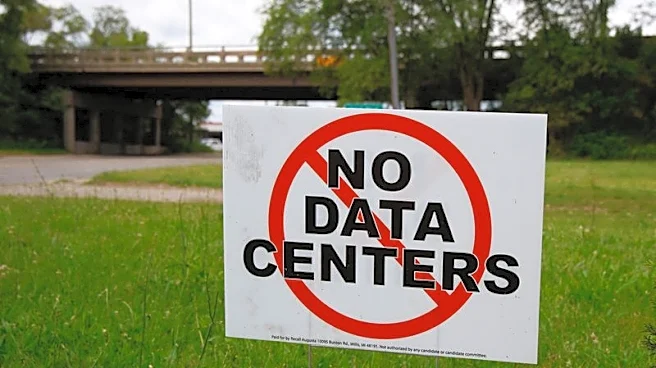
The use of eminent domain for data center projects highlights the tension between infrastructure development and property rights. As data centers become increasingly vital for technological advancement and economic growth, the need for reliable power supply is paramount. However, the process of acquiring land through eminent domain can lead to public backlash, as it often involves taking private property for public use. This situation underscores the challenges of balancing technological progress with the rights and interests of local communities. The outcome of these disputes could set precedents for future infrastructure projects across the country.
What's Next?
As these projects progress, continued negotiations between utility companies and landowners are expected. Legal challenges may arise, potentially delaying construction timelines. Stakeholders, including government officials and advocacy groups, may push for reforms in eminent domain laws to ensure fair compensation and address public concerns. The resolution of these issues will be closely watched by other states facing similar infrastructure demands.