



What's Happening?
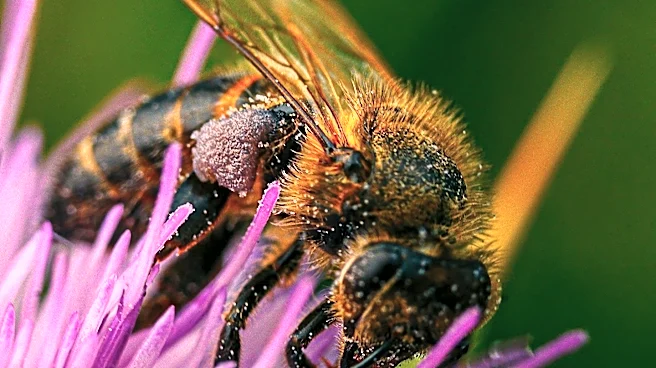
The radio program 'Living on Earth' recently featured discussions on the ecological significance of flowers and pollinators. The show highlighted the role of solitary bees in pollination, the impact of flowers on biodiversity, and the use of technology
to track monarch butterflies. Experts like Bryan Danforth and David George Haskell shared insights into how flowers have shaped ecosystems and the importance of preserving pollinator habitats. The program also touched on the cultural and poetic reflections on nature's beauty amidst environmental challenges.
Why It's Important?
Understanding the role of flowers and pollinators is crucial for maintaining biodiversity and ecosystem health. Pollinators like bees and butterflies are essential for the reproduction of many plant species, which in turn support a wide range of wildlife. The decline in pollinator populations due to habitat loss and climate change poses a significant threat to food security and natural ecosystems. By raising awareness and promoting conservation efforts, programs like 'Living on Earth' contribute to the protection of these vital species.
What's Next?
Efforts to conserve pollinator habitats are expected to increase, with initiatives focusing on creating pollinator-friendly environments in urban and rural areas. Researchers will continue to study the interactions between flowers and pollinators to develop strategies for enhancing biodiversity. Public engagement through citizen science projects, such as tracking pollinator movements, will play a key role in gathering data and fostering community involvement in conservation efforts.
Beyond the Headlines
The discussions on 'Living on Earth' underscore the interconnectedness of human and natural systems. The cultural appreciation of flowers and their role in art and literature reflect a deep-seated recognition of their importance. As environmental challenges mount, there is a growing need to integrate ecological knowledge with cultural values to inspire action and foster a sustainable relationship with the natural world.