





What's Happening?
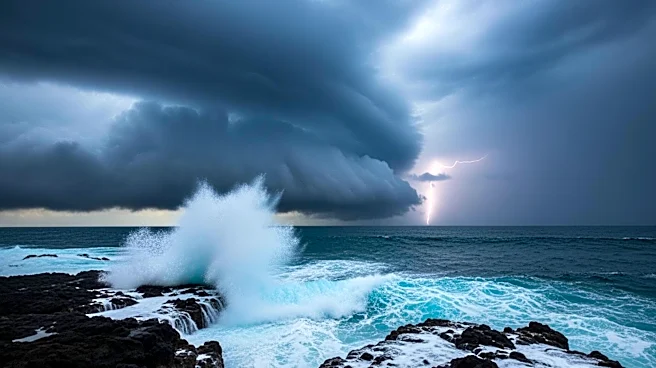
Super Typhoon Sinlaku is expected to make landfall on Tuesday in the Northern Mariana Islands, bringing destructive winds, heavy rain, and flooding. The storm, monitored by the Joint Typhoon Warning Center in Guam, is producing sustained winds of 173
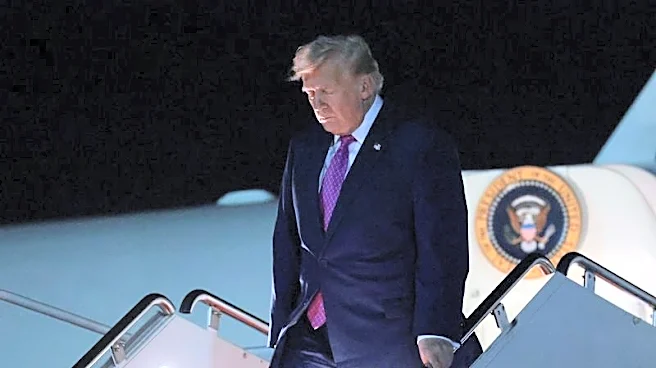
mph and is anticipated to weaken slightly but remain a category 4 or 5 typhoon. Guam, a US territory with military installations, is under a tropical storm warning and could experience damaging winds starting Monday. President Trump has approved emergency disaster declarations for Guam and the Northern Mariana Islands, allowing for additional help with emergency services.
Why It's Important?
The arrival of Super Typhoon Sinlaku poses significant risks to the Northern Mariana Islands and Guam, both of which are US territories. The storm's impact could disrupt military operations and civilian life, necessitating emergency responses and potentially leading to substantial infrastructure damage. The approval of emergency disaster declarations by President Trump underscores the seriousness of the situation, as it enables the mobilization of federal resources to assist in disaster relief efforts. The storm's intensity highlights the vulnerability of these remote islands to extreme weather events, which can have long-lasting effects on their economies and communities.
What's Next?
As Super Typhoon Sinlaku approaches, residents and military personnel in Guam and the Northern Mariana Islands are advised to prepare for the storm's impact. Emergency services are likely to be mobilized to provide aid and support to affected areas. The storm's progression will be closely monitored by the Joint Typhoon Warning Center, and further updates on its path and intensity will be crucial for ongoing preparedness efforts. The aftermath of the storm may require extensive recovery operations, including infrastructure repairs and humanitarian assistance.