




What's Happening?
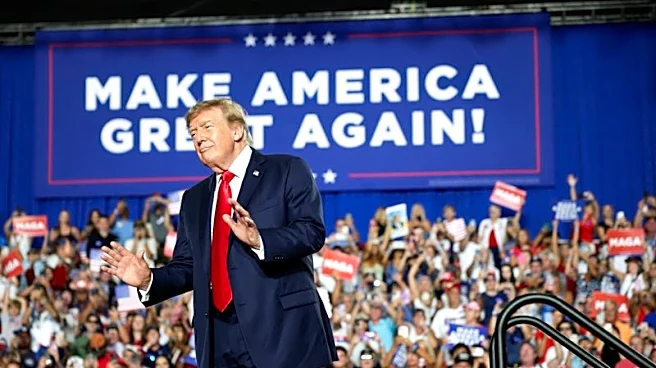
President Trump has granted clemency to 30 individuals, according to his White House pardon czar, Alice Marie Johnson. The list of recipients includes an associate of rapper Jay-Z. Alice Marie Johnson, who herself received a full pardon from President Trump in August
2020, was appointed as his pardon czar in early 2025. The act of clemency, which can include pardons, commutations, and reprieves, is a presidential power that allows for the reduction or elimination of penalties for federal crimes. This action marks a significant use of presidential clemency power, impacting the lives of dozens of individuals who have been involved in the federal justice system. The specific details of each case and the reasons for clemency were not immediately provided in the source.
Why It's Important?
The granting of clemency by President Trump to 30 individuals underscores the significant power of the executive branch in the U.S. justice system. This action can have profound impacts on the lives of those receiving clemency, offering them a second chance and potentially restoring rights lost due to conviction. The involvement of Alice Marie Johnson as the pardon czar highlights a focus on criminal justice reform, as her own case became a prominent example of the need for such reforms. This move could be seen as an effort to address perceived injustices or to reward individuals for rehabilitation. For the broader U.S. society, presidential clemency actions often spark debate about the fairness of the justice system, the role of presidential discretion, and the criteria used for granting such relief. It also signals the administration's priorities regarding criminal justice.
What's Next?
Further details regarding the specific individuals who received clemency and the nature of their offenses may emerge, potentially shedding more light on the administration's criteria for these decisions. Public and media scrutiny will likely follow, with discussions about the merits of each case and the overall impact of these clemency grants. Advocacy groups focused on criminal justice reform may analyze these actions to assess their alignment with broader reform goals. Politically, such actions can be viewed differently by various factions, with some praising the exercise of mercy and others questioning the process or specific choices. The role of the White House pardon czar, Alice Marie Johnson, will likely continue to be central in future clemency considerations by President Trump.
Beyond the Headlines
Presidential clemency, while a constitutional power, often carries deeper implications beyond individual cases. It can serve as a symbolic gesture about the administration's stance on justice, rehabilitation, and the severity of certain offenses. The inclusion of a high-profile associate, such as one linked to Jay-Z, can draw significant public attention, potentially influencing public perception of the justice system and the clemency process itself. Ethically, the exercise of clemency raises questions about equity and access, as not all deserving cases may receive attention. Legally, these actions are final and generally not subject to judicial review, emphasizing the immense power vested in the President. Culturally, clemency decisions can reflect evolving societal views on crime, punishment, and redemption, contributing to ongoing dialogues about the purpose and effectiveness of the U.S. criminal justice system.