


What's Happening?
Researchers from Kyushu University have uncovered new insights into adolescent brain development, challenging the long-held belief that synapse numbers decline during this period. The study, published in Science Advances, reveals that the adolescent brain not
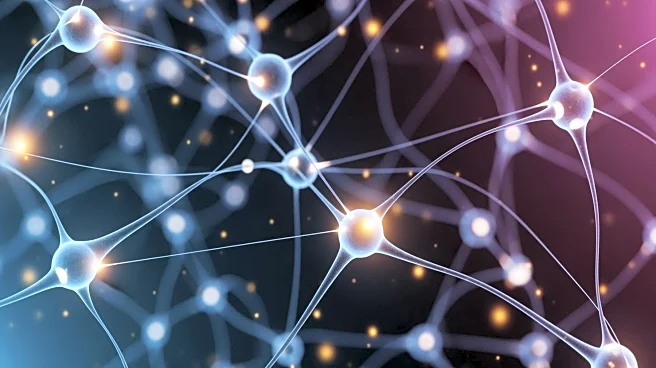
only prunes old connections but also forms dense new clusters of synapses in specific neuron parts. These clusters, termed 'hotspots,' emerge during adolescence and may influence higher-level thinking. The research utilized advanced tools like SeeDB2 and super-resolution microscopy to map dendritic spines in the cerebral cortex's Layer 5 neurons. This discovery suggests that the traditional view of synaptic pruning as a cause of neuropsychiatric conditions like schizophrenia may need reevaluation, as the formation of new synapses could also play a critical role.
Why It's Important?
This discovery has significant implications for understanding brain development and neuropsychiatric disorders. By identifying the formation of synapse hotspots during adolescence, the study suggests that disruptions in this process could contribute to conditions such as schizophrenia. This challenges the prevailing theory that excessive synaptic pruning is the primary cause of such disorders. The findings could lead to new approaches in diagnosing and treating neuropsychiatric conditions by focusing on synapse formation rather than just pruning. Additionally, understanding these developmental processes could enhance educational and therapeutic strategies aimed at supporting adolescent cognitive development.
What's Next?
Future research will aim to identify which brain regions are forming these new synaptic connections during adolescence. This could provide insights into the specific neural circuits being developed and their roles in cognitive functions and disorders. The researchers plan to explore whether similar synapse formation processes occur in primates or humans, which could further validate their findings. Such studies could pave the way for new interventions targeting synapse formation in adolescents, potentially offering new treatments for schizophrenia and other related disorders.