

What's Happening?
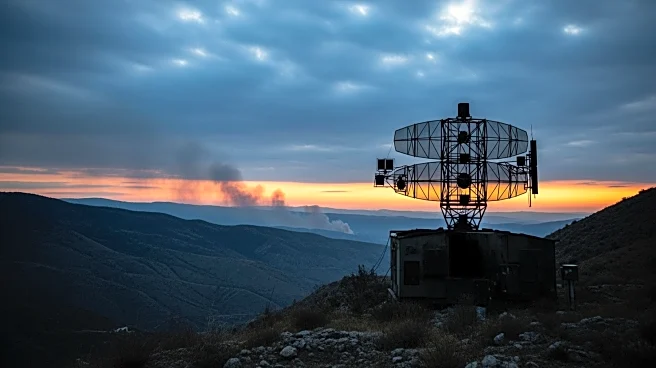
The Israeli Defense Forces (IDF) have announced a military strike on Hezbollah targets in southern Lebanon, specifically in the village of Al-Khiyam. This action is part of ongoing regional tensions involving Israel and Hezbollah, a militant group based
in Lebanon. The IDF targeted military infrastructure and a training compound used by Hezbollah's elite Radwan Force. This development comes amid heightened tensions in the region, with various international actors expressing concern over the potential for escalation. The strike is part of Israel's broader strategy to counter perceived threats from Hezbollah, which it considers a significant security challenge due to its military capabilities and support from Iran.
Why It's Important?
The IDF's strike on Hezbollah targets is significant as it underscores the ongoing volatility in the Middle East, particularly between Israel and Hezbollah. This action could potentially escalate into broader conflict, affecting regional stability. The involvement of Hezbollah, which is backed by Iran, adds a layer of complexity to the situation, as it ties into larger geopolitical dynamics involving Iran's influence in the region. The strike also highlights Israel's proactive defense strategy to neutralize threats before they materialize, which could have implications for its relations with neighboring countries and international stakeholders. The situation is being closely monitored by global powers, given the potential for wider conflict.
What's Next?
Following the IDF's strike, there may be retaliatory actions from Hezbollah, which could lead to further military engagements. The international community, including the United Nations and major world powers, may call for restraint and seek diplomatic solutions to prevent escalation. Israel is likely to continue its surveillance and intelligence operations to monitor Hezbollah's activities closely. Additionally, there may be increased diplomatic efforts to address the underlying issues contributing to the tensions, including Iran's role in supporting Hezbollah. The situation remains fluid, and further developments are expected as both sides assess their next moves.
Beyond the Headlines
The strike on Hezbollah targets by the IDF also raises questions about the broader implications for international law and the rules of engagement in conflict zones. The use of military force in such contexts often leads to debates about proportionality and the protection of civilian lives. Furthermore, the ongoing conflict highlights the challenges of achieving lasting peace in the region, where historical grievances and geopolitical interests often complicate diplomatic efforts. The situation also underscores the importance of international mediation and the role of global institutions in conflict resolution.