




What's Happening?
Pulitzer Prize-winning poet W.S. Merwin, along with his wife Paula, transformed a barren 3-acre parcel of land in Maui, Hawaii, into a 19-acre palm forest. Merwin, who moved to Maui in 1975 to study Zen Buddhism, purchased the denuded land in 1977. The
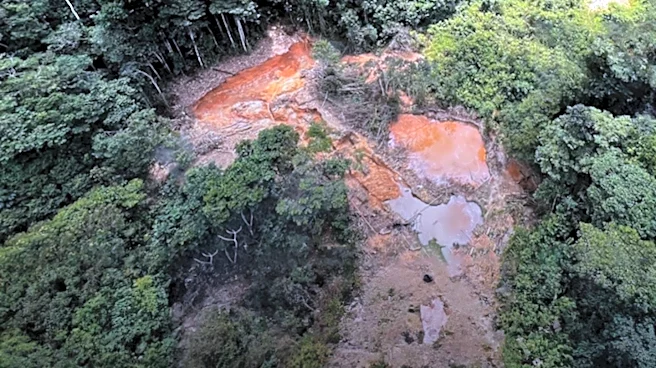
soil had been decimated by extensive logging in the 19th century for whaling ships, followed by cattle grazing, and a failed pineapple plantation that caused topsoil erosion. Initially, Merwin attempted to restore native Hawaiian rainforest species, but after many failed attempts, he shifted his focus to planting endangered palm trees from around the world. Over 40 years, the couple expanded their property and cultivated nearly 3,000 individual palm trees, representing over 480 taxonomic species and more than 125 genera. This collection is now considered one of the largest in the world and a significant 'living treasure house of palm DNA' by experts at the National Tropical Botanical Gardens.
Why It's Important?
This initiative highlights the potential for ecological restoration and conservation, even in severely degraded environments. Merwin's dedication to transforming an agricultural wasteland into a biodiverse palm forest serves as a powerful example of environmental stewardship. The resulting 19-acre arboretum not only preserves numerous critically endangered palm species but also contributes to the understanding of plant adaptation and evolution. This project underscores the importance of individual action in addressing global environmental challenges like habitat loss and species extinction. The Merwin Conservancy, established by the couple, ensures the long-term preservation of this unique ecosystem, providing a model for private land conservation and environmental education. The story also reflects a broader shift in environmental thought, moving beyond purely native restoration to include the conservation of endangered species from diverse origins.
What's Next?
The Merwin Conservancy continues to preserve and protect the home and biodiverse landscape, including the palm collection and other rare and endangered flora. The conservancy's ongoing work will likely involve maintaining the extensive palm collection, conducting research, and educating the public about environmental conservation. The property's agricultural, wildlife habitat, archaeological, and scenic values will continue to be protected. The legacy of W.S. Merwin, both as a poet and an environmental activist, will likely inspire future conservation efforts and discussions on ecological restoration. The documentary film, 'Even Though the Whole World Is Burning,' which featured Merwin's work, will continue to raise awareness about his contributions to both literature and environmentalism.
Beyond the Headlines
The transformation of the Maui land by W.S. Merwin delves into the deeper human connection with nature and the ethical responsibility to restore damaged ecosystems. Merwin's initial disillusionment with political outrage and his search for quiet on Maui led him to a profound engagement with the land, demonstrating how personal well-being can be intertwined with environmental healing. His decision to focus on endangered palm species, even if not native to Hawaii, raises questions about the definition of 'restoration' and the priorities in conservation efforts. It suggests a pragmatic approach to biodiversity preservation when native restoration proves challenging. The project also highlights the long-term commitment required for significant ecological change, spanning decades and outliving its creators, emphasizing the intergenerational aspect of environmental stewardship.