



What's Happening?
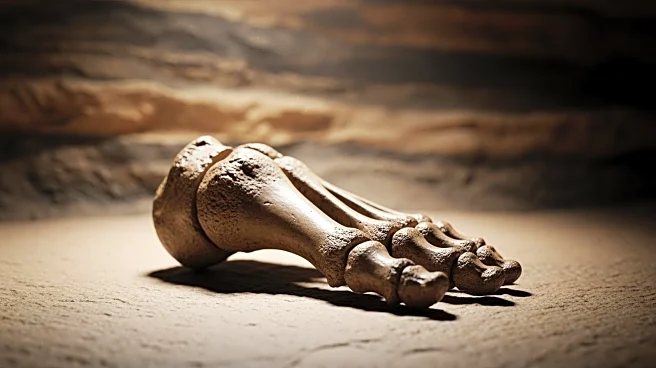
A recent study led by paleoanthropologist Jesse Martin from La Trobe University suggests that the famous hominin fossil known as 'Little Foot' may represent a previously unidentified species. Discovered in the Sterkfontein cave in South Africa, Little Foot is one
of the most complete skeletons of an ancient human ancestor ever found. Initially thought to belong to the Australopithecus africanus species, the fossil was later attributed to A. prometheus by its discoverers. However, the new study challenges these classifications, proposing that Little Foot does not fit neatly into either category. Using 3D scanning technology, researchers identified significant anatomical differences between Little Foot and other known specimens, suggesting it may belong to a new species altogether. The study emphasizes the need for further research to accurately classify this ancient ancestor.
Why It's Important?
The reclassification of Little Foot could have significant implications for our understanding of human evolution. If confirmed as a new species, it would add complexity to the evolutionary tree, potentially altering the timeline and relationships between known hominin species. This discovery underscores the importance of continuous research and technological advancements in paleoanthropology, which can lead to new insights into human ancestry. The findings also highlight the challenges in classifying ancient fossils, which can have broader implications for the study of human origins and the evolutionary process.