





What's Happening?
The Casper City Council voted on Tuesday to amend city ordinances, allowing drive-through windows for retail package liquor sales. This decision removes a previous local restriction, bringing Casper's regulations into alignment with Wyoming state statute.
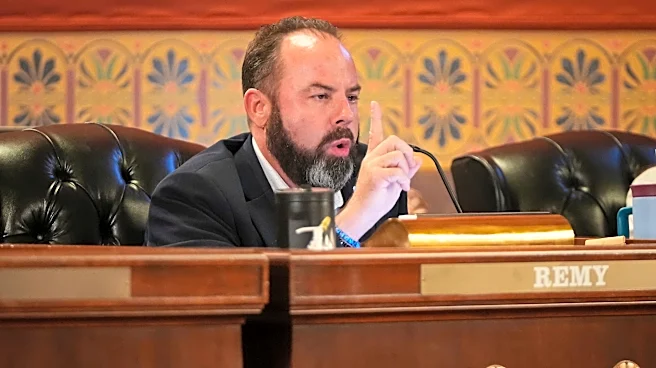
While the amendment permits drive-through liquor sales, strict safety rules must still be observed. Casper Chief of Staff Fleur Tremel outlined these regulations in a city memo, specifying that drive-through areas must be well-lit, open to visual inspection, owned or leased by the licensee, and prohibit sales to minors or intoxicated individuals. Additionally, drive-through sales are not permitted to utilize publicly owned sidewalks, streets, or alleys. The ordinance passed despite some dissent, with Councilors Kyle Gamroth and Brandy Haskins voting against the measure, and Amber Pollock abstaining. Councilor Gamroth expressed concerns about the proliferation of alcohol establishments and related crime, advocating for a more data-driven approach to alcohol density. This approved ordinance was a scaled-back version of an initial broader proposal that included catering permits for resort liquor licenses. However, due to objections from local alcohol retailers, the council decided not to proceed with that specific provision, maintaining Casper's existing restriction on such permits, despite other Wyoming cities allowing them.
Why It's Important?
This change in Casper's liquor laws signifies a shift towards greater convenience for consumers and potentially increased revenue opportunities for local businesses holding retail package liquor licenses. By aligning with state statute, Casper removes a local regulatory hurdle that may have put its businesses at a disadvantage compared to those in other Wyoming cities. For residents, the availability of drive-through liquor sales offers a quicker and more accessible purchasing option. However, the decision also highlights ongoing debates within the community regarding alcohol accessibility and its potential social impacts. Councilor Gamroth's concerns about alcohol-related crime and the need for a data-driven framework for alcohol density underscore the tension between economic liberalization and public health and safety. The council's decision to scale back the original proposal by excluding catering permits for resort liquor licenses demonstrates a responsiveness to local business concerns and a cautious approach to broader deregulation, indicating a desire to balance business interests with community feedback. This outcome suggests that while the council is open to modernizing certain regulations, it remains sensitive to the potential consequences of widespread changes in alcohol policy.
What's Next?
With the Casper City Council's approval, businesses holding retail package liquor licenses can now begin to establish drive-through windows, provided they comply with the newly updated city ordinances and strict safety regulations. Licensees will need to ensure their drive-through areas are well-lit, visually inspectable, and do not utilize public rights-of-way. They must also implement procedures to prevent sales to minors or intoxicated individuals. It is likely that local businesses will assess the economic viability and logistical requirements of adding drive-through services. The city's enforcement agencies will be responsible for monitoring compliance with the new regulations. The debate surrounding alcohol density and related social issues, as raised by dissenting council members, may continue in future discussions, potentially leading to further policy considerations or data collection efforts regarding alcohol sales and crime rates in Casper.
Beyond the Headlines
The decision to allow drive-through package liquor sales in Casper reflects a broader trend in retail towards convenience and efficiency, accelerated by changing consumer expectations. While seemingly a minor regulatory adjustment, it touches upon significant societal considerations regarding public health, safety, and local business competition. The council's partial adoption of the proposed changes—approving drive-throughs but rejecting catering permits for resort licenses—illustrates the complex interplay between state law, local autonomy, and stakeholder influence. This nuanced approach suggests that while there's a move towards modernization and alignment with state norms, local concerns and the input of existing businesses still hold considerable sway in policy-making. The ongoing discussion about alcohol density and its impact on crime points to a deeper community conversation about urban planning, public welfare, and the balance between economic freedom and social responsibility, which may evolve as the effects of this new ordinance become apparent.