


What's Happening?
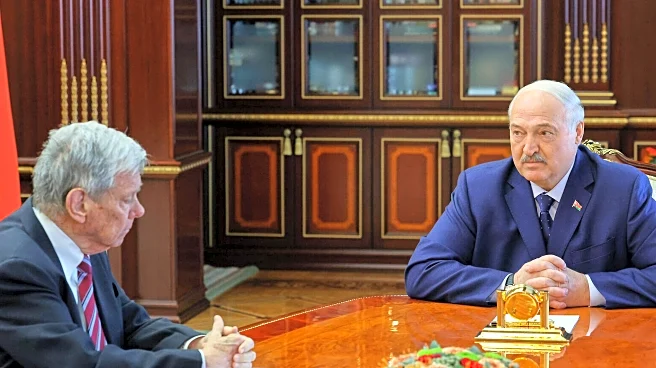
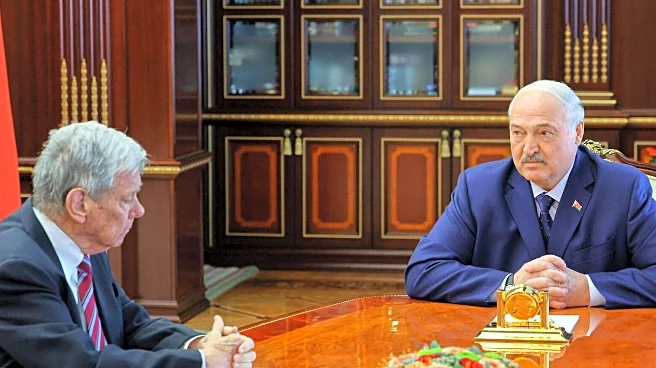
Belarusian President Alexander Lukashenko has ordered the release of 250 political prisoners as part of an agreement with the United States to lift certain sanctions. This development follows a meeting between Lukashenko and U.S. President Donald Trump’s
special envoy for Belarus, John Coale, in Minsk. The release is seen as a significant humanitarian gesture and marks the largest one-time release of political prisoners in Belarus. In exchange, the U.S. will lift sanctions on two Belarusian state banks and the country's Finance Ministry, as well as remove top Belarusian potash producers from a sanctions list. Opposition leader Sviatlana Tsikhanouskaya praised the release, highlighting the relief and hope it brings to families of the prisoners.
Why It's Important?
The release of political prisoners in Belarus is a critical step in improving relations between Belarus and Western countries, particularly the United States. It signals a potential shift in Belarus's international stance, as the country has been largely isolated due to its human rights record and its alliance with Russia. The lifting of sanctions could provide economic relief to Belarus, particularly in its potash sector, which is a significant source of export revenue. This move may also influence Belarus's domestic politics by reducing internal repression and potentially fostering a more open political environment. However, the long-term impact on Belarus's political landscape remains uncertain, as many political prisoners are still detained.
What's Next?
The release of prisoners and the lifting of sanctions could lead to further diplomatic engagements between Belarus and the United States. There may be additional negotiations aimed at addressing other areas of concern, such as human rights and democratic reforms. The international community will likely monitor Belarus's actions closely to ensure compliance with any agreements made. Domestically, the Belarusian government may face pressure to continue releasing political prisoners and to implement broader political reforms. The opposition, led by figures like Tsikhanouskaya, will likely continue advocating for the release of all political prisoners and for an end to political repression.
Beyond the Headlines
The release of political prisoners in Belarus highlights the complex interplay between international diplomacy and domestic politics. It raises questions about the effectiveness of sanctions as a tool for promoting human rights and democratic governance. The situation also underscores the challenges faced by authoritarian regimes in balancing internal control with external pressures. The involvement of the U.S. in negotiating the release may set a precedent for future diplomatic efforts in similar contexts, where humanitarian concerns are leveraged to achieve political and economic objectives.