



What's Happening?
The United Nations’ International Organization for Migration (IOM) has issued a stark warning that Sudan’s aid network is on the brink of collapse. Ongoing conflict, heavy rains, and continuous displacement are threatening to bring an 'imminent end' to the emergency
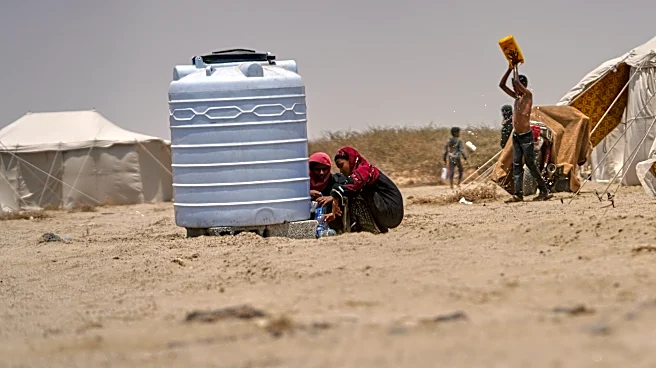
relief supply provided through the IOM’s Common Humanitarian Pipeline. Without immediate donations, shelter and aid relief supplies are projected to be depleted by the end of the current month. The operational capacity of warehouses crucial for maintaining the pipeline can only be sustained until the end of the year. The war between the Sudanese army and the paramilitary Rapid Support Forces (RSF), which began in April 2023, has resulted in over 200,000 deaths and created the world’s largest hunger and displacement crisis. Despite the escalating needs, global aid funding has seen a significant reduction, stretching resources thin. The IOM’s Director General, Amy Pope, emphasized that the entire humanitarian system could collapse within weeks without new funding, urging the international community not to abandon the people of Sudan during this critical period.
Why It's Important?
The potential collapse of aid networks in Sudan carries severe humanitarian implications, exacerbating an already dire crisis. With 8.6 million people internally displaced and ongoing violence, floods, and heavy rains damaging shelters, the cessation of aid would leave millions without essential support. The IOM’s network, comprising nearly 100 national and international NGOs, has provided aid to 2.8 million people since July 2023, but its reach is diminishing due to falling funds. This situation highlights a critical gap in international humanitarian response, where the scale of need far outstrips available resources. The World Food Programme (WFP) has also experienced a significant drop in funding, with this year's contributions being roughly half of last year's. This funding shortfall means that even where access to affected populations is possible, aid cannot be fully utilized, leading to preventable suffering and loss of life. The crisis underscores the fragility of humanitarian operations in conflict zones and the urgent need for sustained international commitment.
What's Next?
The immediate future for Sudan's aid networks hinges on urgent financial contributions from international donors. Without these funds, the IOM anticipates that shelter and aid relief supplies will run out by the end of the month, and warehouse operations will cease by the end of the year. The IOM requires $15 million to sustain its system for a year to support 305,000 people, and $42 million to restore aid levels to those provided in 2024. The WFP also needs increased funding to address the humanitarian crisis effectively. The ongoing conflict, marked by incidents such as RSF drone attacks on civilian infrastructure, continues to displace populations and complicate aid delivery. The international community faces a critical decision point: either provide immediate and substantial funding to prevent a complete collapse of aid operations or witness a further deterioration of the humanitarian situation in Sudan, leading to increased mortality and suffering among vulnerable populations.
Beyond the Headlines
The impending collapse of aid networks in Sudan reveals deeper systemic challenges within global humanitarian aid. The significant reduction in funding, despite an escalating crisis, points to a potential shift in international priorities or donor fatigue. This situation raises ethical questions about the responsibility of the global community to protect and assist populations affected by conflict and displacement. The reliance on short-term funding cycles and emergency appeals, rather than sustained, predictable support, leaves humanitarian organizations vulnerable and limits their ability to plan and execute long-term recovery efforts. Furthermore, the targeting of civilian infrastructure in ongoing conflicts, as reported with the RSF drone attacks, highlights the increasing disregard for international humanitarian law, making aid delivery even more perilous. The long-term implications include a generation of Sudanese children deprived of education and healthcare, widespread food insecurity, and prolonged instability, potentially leading to further regional displacement and migration crises.