
What's Happening?
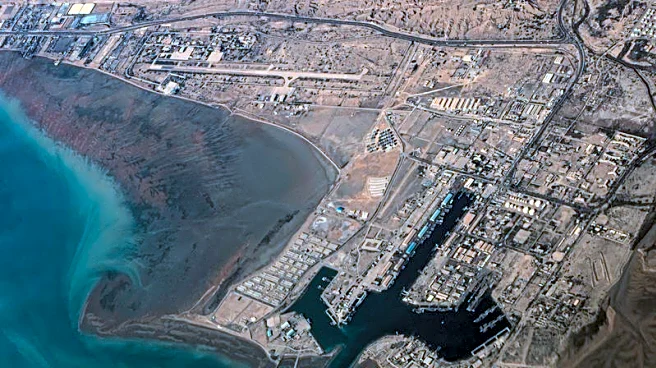
Iran is set to conduct a military drill in the Strait of Hormuz, a critical waterway for global oil trade, with live fire exercises scheduled for Sunday and Monday. The U.S. Central Command has issued
a warning to Iran, cautioning against any unsafe behavior that could threaten U.S. forces or commercial vessels in the area. The Strait of Hormuz is a strategic chokepoint where a significant portion of the world's oil supply passes, making it a focal point for geopolitical tensions. The U.S. military has emphasized its readiness to respond to any threats, highlighting the potential for escalation in the region.
Why It's Important?
The Strait of Hormuz is a vital artery for global energy supplies, with a fifth of the world's oil passing through it. Any disruption in this region can have significant implications for global energy prices and economic stability. The planned Iranian military drill underscores the ongoing tensions between Iran and the U.S., particularly in light of recent geopolitical developments. The U.S. warning reflects concerns over potential conflicts that could arise from miscalculations or provocations in this sensitive area. The situation also highlights the broader strategic contest in the Middle East, where control over key maritime routes is a critical factor.
What's Next?
The international community will be closely monitoring the situation in the Strait of Hormuz. Potential responses from the U.S. and its allies could include increased military presence or diplomatic efforts to de-escalate tensions. The outcome of the drill and any subsequent actions by Iran or the U.S. could influence future negotiations on Iran's nuclear program and regional security dynamics. Stakeholders in the global energy market will also be watching for any signs of disruption that could affect oil supply and prices.