



What's Happening?
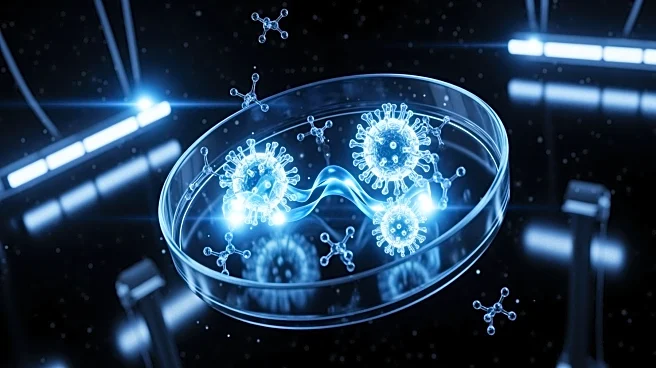
A recent study conducted aboard the International Space Station (ISS) has revealed that viruses, specifically phages that infect bacteria, behave differently in space compared to Earth. Researchers found that these viruses and their bacterial hosts, which
are crucial to microbial ecosystems, interact in fundamentally different ways under microgravity conditions. The study, published in PLOS Biology, involved comparing bacterial E. coli samples infected with the T7 phage both on Earth and in space. The results showed that while infection was initially delayed in space, the phages eventually adapted, accumulating mutations that enhanced their infectivity. These findings suggest that space conditions can significantly alter the evolutionary trajectory of viruses and bacteria, providing new insights into microbial adaptation.
Why It's Important?
The study's findings have significant implications for both space exploration and human health. Understanding how viruses and bacteria interact in space can help in developing strategies to manage microbial risks during long-term space missions. Moreover, the ability of phages to adapt and become more infectious in space could lead to advancements in combating drug-resistant pathogens on Earth. This research highlights the potential for space-based studies to uncover new biological insights that could be applied to improve health outcomes and enhance the safety of astronauts. The study underscores the importance of continued research in space to address both extraterrestrial and terrestrial health challenges.
What's Next?
Future research is expected to delve deeper into the complex interactions between viruses and bacteria in space. Scientists aim to conduct more experiments under varied conditions to better understand the mechanisms driving these adaptations. The insights gained could inform the development of engineered phages with enhanced capabilities to fight drug-resistant infections. Additionally, these studies may influence the design of microbial management protocols for space missions, ensuring the health and safety of astronauts. As space exploration advances, understanding microbial dynamics in microgravity will be crucial for the success of long-duration missions.
Beyond the Headlines
The study opens up new avenues for exploring the ethical and practical implications of manipulating microbial life in space. The potential to engineer phages with superior activity raises questions about the long-term impacts on ecosystems and human health. As space research continues to push boundaries, it is essential to consider the broader consequences of these scientific advancements. The findings also highlight the interconnectedness of space and Earth-based research, demonstrating how discoveries in one realm can significantly impact the other.