





What's Happening?
Investigators from Guatemala's National Civil Police (PNC), supported by a significant police contingent and personnel from the General Sub-directorate of Information and Communication Technologies (SGTIC) and the General Sub-directorate of Support and Logistics
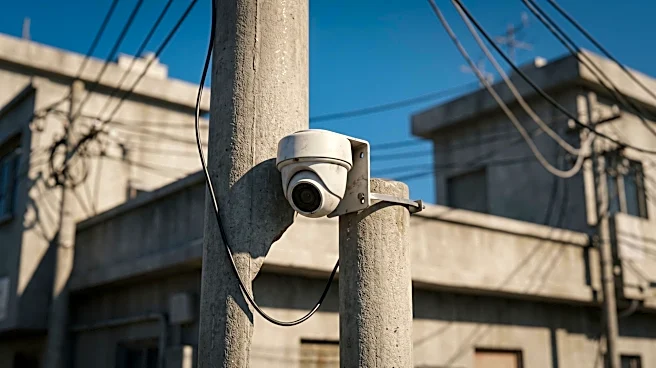
(SGAL), are actively removing clandestine surveillance cameras in Zone 18. These devices, predominantly white, are being dismantled from poles using aluminum ladders, gloves, and other tools. The PNC is conducting investigations to determine the purpose of these illegally installed video cameras. Authorities suspect that these cameras may be utilized by members of the Barrio 18 gang to monitor residents in the area, raising concerns about public safety and potential criminal activities. The operation highlights ongoing efforts by Guatemalan law enforcement to counter unauthorized surveillance and its potential links to organized crime.
Why It's Important?
The removal of clandestine surveillance cameras in Zone 18 by the Guatemalan PNC is important as it directly addresses concerns about public safety and the potential misuse of technology by criminal organizations. If these cameras are indeed being used by gangs like Barrio 18, their presence signifies a sophisticated level of control and intimidation over local communities. This situation can erode public trust in safety and security, making residents vulnerable to extortion, threats, and other criminal acts. The PNC's intervention aims to disrupt these illicit surveillance networks, which are crucial for gangs to maintain their operations and exert influence. The involvement of various specialized units within the PNC and the Army underscores the seriousness with which Guatemalan authorities are treating this issue, recognizing its broader implications for national security and the rule of law. The success of these operations could serve as a deterrent to other criminal groups attempting similar surveillance tactics.
What's Next?
Following the dismantling of these clandestine cameras, the PNC will continue its investigative efforts to identify the individuals or groups responsible for their installation and to ascertain the full extent of their operations. This will likely involve forensic analysis of any recovered equipment and intelligence gathering within Zone 18 to uncover the specific objectives behind the surveillance. Authorities will also focus on strengthening community engagement and intelligence networks to prevent the re-establishment of such illicit systems. Increased police presence and patrols in the affected areas can be expected to reassure residents and deter further criminal activity. The findings from these investigations could lead to arrests and legal proceedings against those involved in illegal surveillance and gang-related activities, potentially disrupting the operational capabilities of criminal organizations in Guatemala City.
Beyond the Headlines
The presence of clandestine surveillance cameras, potentially operated by gangs, points to a deeper societal challenge in Guatemala: the struggle for control over urban spaces between state authorities and criminal elements. This situation highlights the evolving tactics of organized crime, which increasingly leverage technology to enhance their operations, including monitoring, intimidation, and intelligence gathering. Beyond the immediate security implications, such surveillance can foster a climate of fear and distrust, impacting the social fabric of communities. It can also deter economic activity and investment in affected areas, as businesses and residents may perceive the environment as unsafe. The long-term implications include the need for comprehensive strategies that combine law enforcement efforts with social programs aimed at community building, economic development, and youth engagement to counter the root causes of gang recruitment and influence. This incident underscores the critical importance of digital security and privacy in an era where surveillance technologies are becoming more accessible and easily misused.