






What's Happening?
On September 28, 2026, Representatives Tim Walberg (R-MI), Marcy Kaptur (D-OH), Bill Huizenga (R-MI), Debbie Dingell (D-MI), David Joyce (R-OH), Haley Stevens (D-MI), Tom Barrett (R-MI), and Hillary Scholten (D-MI) introduced the Regional Great Lakes
Partnership Act. This bipartisan and bicameral bill aims to enhance federal support for Great Lakes research and conservation. The legislation proposes designating the Great Lakes Commission (GLC) as the official Regional Great Lakes Partnership within the National Oceanic and Atmospheric Administration’s (NOAA) Regional Ocean Partnerships Program. This designation is intended to ensure the Great Lakes region receives a fair share of program funding, thereby providing federal resources to support the GLC's ongoing work in coordinating Great Lakes research and conservation efforts. Companion legislation has also been advanced in the Senate by U.S. Senators Gary Peters (D-MI) and Bernie Moreno (R-OH).
Why It's Important?
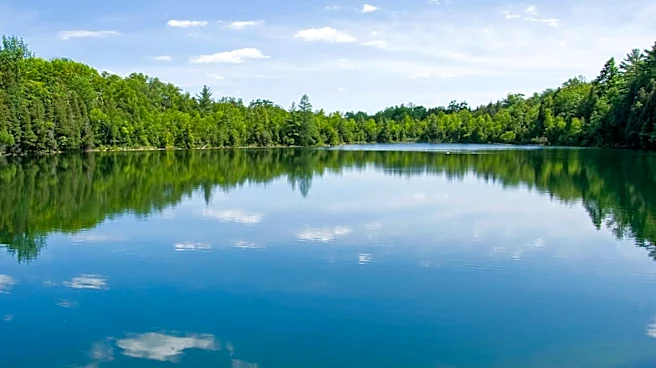
The Great Lakes represent the largest freshwater system globally and are crucial to the economy, identity, and long-term prosperity of states like Michigan. This legislation is significant because it seeks to rectify a funding disparity, ensuring the Great Lakes region receives equitable federal support compared to coastal ocean states that already benefit from NOAA's Regional Ocean Partnerships Program. By strengthening federal partnerships and expanding funding opportunities, the bill aims to advance critical research, coordination, and conservation efforts necessary to protect this indispensable resource. The Great Lakes are vital for the economies and communities surrounding them, and securing adequate federal resources is essential for safeguarding the waters and ecosystems that rely on a healthy Great Lakes environment for generations to come. The bipartisan nature of the bill underscores the widespread recognition of the Great Lakes' importance.
What's Next?
The Regional Great Lakes Partnership Act, having been introduced in the House, will now proceed through the legislative process. Given that companion legislation has already advanced through the Senate Commerce, Science, and Transportation Committee, there is a clear path for this bill to move forward. The next steps will likely involve committee hearings, potential amendments, and votes in both the House and Senate. If passed by both chambers, the bill would then be sent to the President for signature. The Great Lakes Commission is expected to continue working with partners to realize the full benefits of this program, should it become law, further strengthening their more than 70 years of regional leadership in fostering dialogue, building consensus, and advancing coordinated solutions for the Great Lakes' challenges.
Beyond the Headlines
Beyond the immediate legislative impact, this initiative highlights a broader recognition of the interconnectedness of environmental health and regional economic stability. The Great Lakes, as a shared resource among multiple U.S. states and Canadian provinces, necessitate a coordinated and well-funded approach to conservation. The designation of the Great Lakes Commission as a Regional Ocean Partnership within NOAA could set a precedent for how other large, shared inland water systems are managed and funded at the federal level. This move also underscores the growing emphasis on regional partnerships in addressing complex environmental challenges, fostering a model of collaborative governance that transcends political divides for the common good of vital natural resources.