






What's Happening?
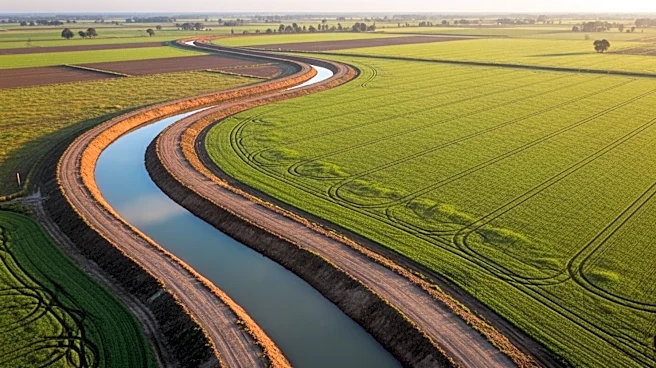
A large-scale initiative has been launched to excavate and re-excavate canals, rivers, and other waterways, aiming to bolster water management and agricultural productivity. This program, part of a five-year development plan, targets the restoration of 20,000
kilometers of waterways. The initiative was officially launched in Dinajpur, with Prime Minister Tarique Rahman inaugurating the program by symbolically digging soil at the Sahapara canal. The project is being implemented across 54 districts, marking one of the most ambitious rural infrastructure efforts in recent years. The Sahapara canal, which is approximately 12.2 kilometers long and connected to the Punarbhaba River, is expected to significantly improve irrigation facilities and reduce waterlogging once re-excavated. Local residents have expressed optimism, noting that the canal had long been clogged, creating challenges for farming activities.
Why It's Important?
The initiative is crucial for enhancing agricultural output and ensuring better water retention during the rainy season, which is vital for rural development. By restoring these waterways, the project aims to improve irrigation facilities, thereby increasing agricultural productivity. Additionally, experts highlight the environmental benefits, stating that revitalizing natural water channels can help maintain ecological balance and mitigate the effects of climate change. This program is seen as a continuation of earlier efforts to improve rural infrastructure, now being implemented on a much larger and more modern scale to meet current demands. The success of this initiative could serve as a model for similar projects in other regions, potentially leading to widespread improvements in water management and agricultural practices.
What's Next?
As the project rolls out across 54 districts, continuous monitoring and evaluation will be essential to ensure its success. Stakeholders, including local governments and agricultural communities, will likely play a significant role in the implementation and maintenance of the restored waterways. The initiative may also prompt further investments in rural infrastructure, as its success could demonstrate the benefits of such large-scale projects. Additionally, the environmental impact of the project will be closely watched, as it could provide valuable insights into the effectiveness of using natural water channels to combat climate change.
Beyond the Headlines
The project not only addresses immediate agricultural and water management needs but also has broader implications for rural development and environmental sustainability. By improving water retention and reducing waterlogging, the initiative could lead to more stable agricultural yields, which is crucial for food security. Furthermore, the environmental benefits of maintaining ecological balance and mitigating climate change effects could have long-term positive impacts on the region's biodiversity and natural resources. This initiative highlights the importance of integrating environmental considerations into infrastructure development, setting a precedent for future projects.