



What's Happening?
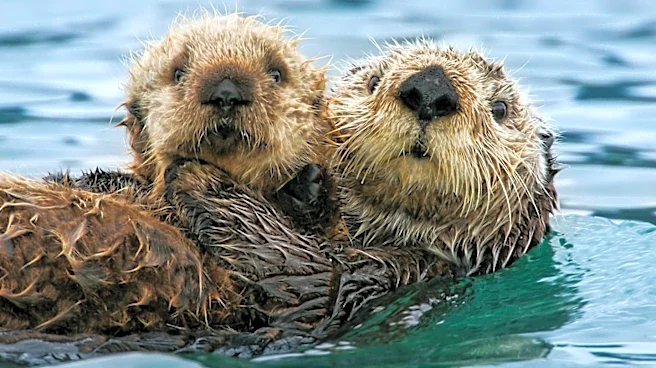
Wolves on Pleasant Island, Alaska, have significantly altered their diet from deer to sea otters after the local deer population plummeted. Researchers observed that in 2015, deer constituted 75% of the wolves' diet, but by 2017, sea otters became the primary
food source, making up 57% of their diet, while deer dropped to 7%. This unexpected dietary shift has been documented in other coastal Alaskan wolf packs as well, with wolves observed hunting and scavenging sea otters along shorelines. This adaptation allows wolf populations to persist even when their traditional terrestrial prey becomes scarce. However, this change in diet has led to unprecedented mercury concentrations in the wolves, with Pleasant Island wolves showing nearly eight times higher mercury levels in their hair compared to Arctic wolves, and 278 times higher in their livers than Interior Alaska wolves.
Why It's Important?
This dietary shift has significant ecological implications, demonstrating the resilience and adaptability of apex predators like wolves in response to changes in their environment. It highlights how predator-prey dynamics can be unexpectedly altered, potentially decoupling wolf population dynamics from large terrestrial herbivores. This could lead to wolves maintaining lower densities of large herbivores, impacting vegetation and other animals dependent on those resources across vast coastal areas. The high mercury levels found in these otter-eating wolves are particularly concerning. Methylmercury, which bioaccumulates up the aquatic food chain, is absorbed by wolves when they consume marine mammals. This raises questions about the long-term health and reproductive success of these wolf populations, and serves as a stark indicator of environmental contamination in marine ecosystems, potentially affecting other species that rely on similar food sources.
What's Next?
Further research is underway to understand the long-term consequences of this dietary shift on both wolf and sea otter populations. Studies will focus on how sea otters are adapting to increased predation pressure from wolves, including potential behavioral changes like spending more time at sea, which could have energetic costs. Researchers are also comparing wolf diets in mainland areas with and without sea otters to better understand the broader impact of sea otter recolonization on coastal wolf behavior and ecosystem dynamics. The ongoing monitoring of mercury levels in these wolves will be crucial to assess the health effects of this contamination and to inform conservation efforts for both species. This unexpected interaction underscores the need for comprehensive ecosystem management that considers complex interspecies relationships and environmental factors like pollution.
Beyond the Headlines
The phenomenon of Alaskan wolves shifting to a marine-based diet and subsequently accumulating high levels of mercury reveals a complex interplay between ecological adaptation and environmental health. It underscores how human-induced changes, such as historical overhunting of sea otters leading to their recovery and subsequent overlap with wolf territories, can create unforeseen ecological cascades. The mercury contamination in wolves serves as a bioindicator, reflecting broader issues of methylmercury cycling in aquatic environments, which can originate from both natural processes and anthropogenic sources. This situation highlights the interconnectedness of terrestrial and marine ecosystems and the potential for contaminants to move across these boundaries, impacting top predators. It also raises ethical considerations regarding wildlife management in areas affected by environmental pollution, as conservation strategies must now account for the health risks posed by such contaminants to resilient species.