
What's Happening?
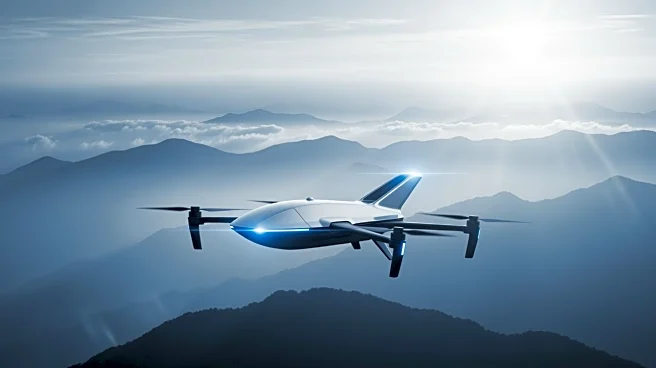
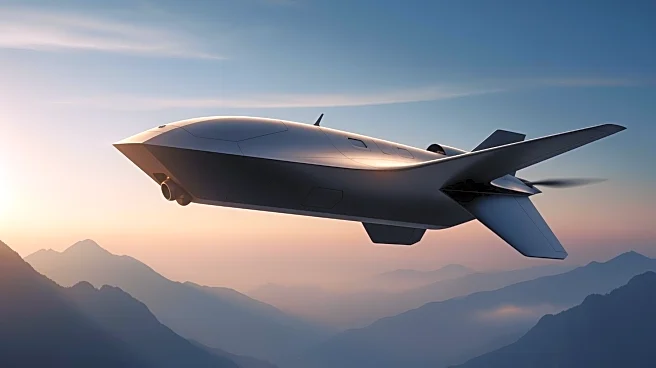
China's CH-7, a stealth unmanned aerial vehicle (UAV) developed by the China Aerospace Science and Technology Corporation (CASC), has successfully completed its maiden flight. This development marks a significant
milestone for the CH-7 program, which has been in progress for several years. The UAV, known for its low-observable and tailless design, was initially showcased at Airshow China in 2018. Over the years, the CH-7 has undergone various design modifications, including changes to its wing flaps and engine nacelle. The primary objective of the recent flight was to validate the design and technological advancements of the UAV. The CH-7 is now described as a tactical surveillance aircraft with electronic support and jamming capabilities, a shift from its initial description as a deep-penetration strike platform.
Why It's Important?
The successful flight of the CH-7 UAV represents a significant advancement in China's military capabilities, particularly in the realm of unmanned aerial technology. This development could enhance China's surveillance and reconnaissance operations, providing the country with a strategic advantage in intelligence gathering and electronic warfare. The CH-7's capabilities in electronic support and jamming could potentially disrupt adversary communications and radar systems, thereby strengthening China's defense posture. This advancement also underscores China's commitment to expanding its military technology and could influence global military dynamics, prompting other nations to accelerate their own UAV development programs.