





What's Happening?
The Getty Foundation's 'Connecting Art Histories' initiative supported a multinational traveling research seminar focused on the Amazon Basin. This seminar brought together scholars from various disciplines, including art historians, archaeologists, anthropologists,
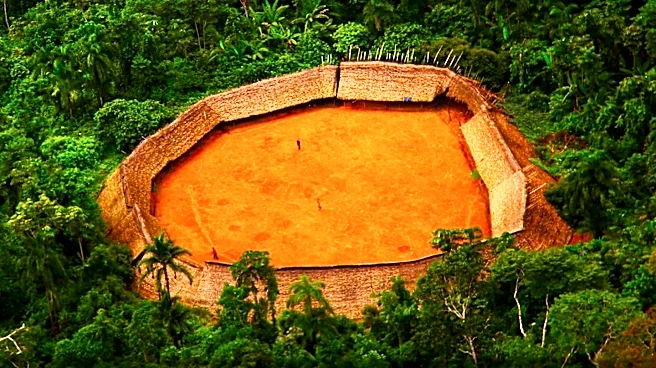
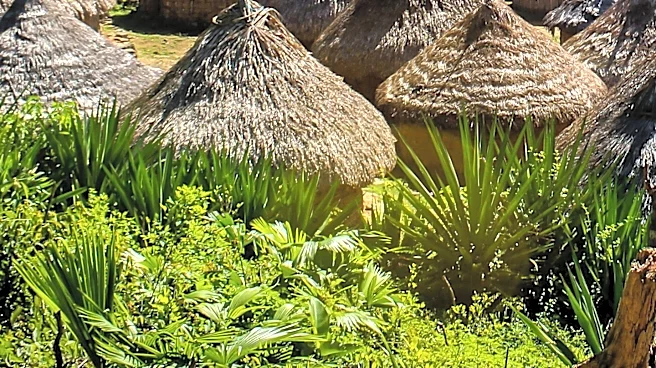
and environmental scientists, to study Amazonian art and culture through an Indigenous-centered lens. Participants traveled to urban centers like Belém, Brazil, and remote villages in Ecuador and Colombia, including Sarayaku, Ecuador, home to a Kichwa Indigenous community. The program aimed to foster a more collaborative and inclusive approach to art history, emphasizing the importance of Indigenous perspectives that have historically been marginalized. Scholars engaged in hands-on workshops, learning traditional pottery techniques and natural dye production from local artisans, and participated in oral knowledge-sharing sessions with community leaders. The initiative seeks to bridge the gap between academic study and real-world experiences, encouraging scholars to rethink traditional art historical frameworks by directly engaging with the communities and environments they study.
Why It's Important?
This initiative is important because it challenges conventional Eurocentric approaches to art history by prioritizing Indigenous knowledge and perspectives. By directly involving Indigenous communities as co-authors and educators, the program promotes a more ethical and respectful engagement with cultural heritage. This shift can lead to a richer, more nuanced understanding of Amazonian art and its historical context, moving beyond colonial influences to highlight the deep connections between different Amazonian communities and their environment. The collaborative model also empowers Indigenous communities by giving them agency in how their stories and cultural practices are represented. Furthermore, by fostering interdisciplinary collaboration, the seminar encourages a holistic approach to studying the Amazon, recognizing that challenges like environmental degradation and cultural preservation require insights from various fields, not just art history. This approach can inform more effective conservation strategies and cultural preservation efforts in the region.
What's Next?
The 'Connecting Art Histories' initiative plans to continue its efforts to reshape research trajectories and foster long-term scholarly and institutional partnerships. Several seminar participants are already applying the collaborative curatorship model learned during the trip to future projects, such as Diana Iturralde, a PhD candidate at Rutgers University, who curated an exhibition in New York featuring ceramics from the Puyo community of Ecuador. Additionally, academic colleagues at Universidad San Francisco de Quito, including Carmen Fernández-Salvador, have co-organized an exhibition at the National Museum of Ecuador with women from the Puyo and Sarayaku communities, allowing them to decide the presentation of their objects. These ongoing collaborations suggest a sustained effort to integrate Indigenous voices and practices into mainstream art historical discourse and museum practices. The initiative aims to continue expanding its reach through in-person and online workshops, graduate courses, and immersive traveling research seminars.
Beyond the Headlines
The initiative's emphasis on co-creation rather than appropriation has profound ethical and cultural implications. It directly addresses the historical power imbalances in academic research and museum practices, where Indigenous cultures have often been studied and displayed without their consent or input. By recognizing Indigenous communities as co-authors and giving them agency in storytelling, the program sets a precedent for decolonizing academic fields and promoting cultural equity. This approach also highlights the intrinsic link between cultural preservation and environmental stewardship, as Indigenous communities often possess invaluable knowledge about sustainable living and ecological balance. The seminar's focus on the Amazon River as a connector, rather than a boundary, encourages a broader understanding of regional identities and cultural exchange, moving beyond nation-state divisions. This shift in perspective can foster greater solidarity and collaborative action among diverse communities in the Amazon Basin.