

What's Happening?
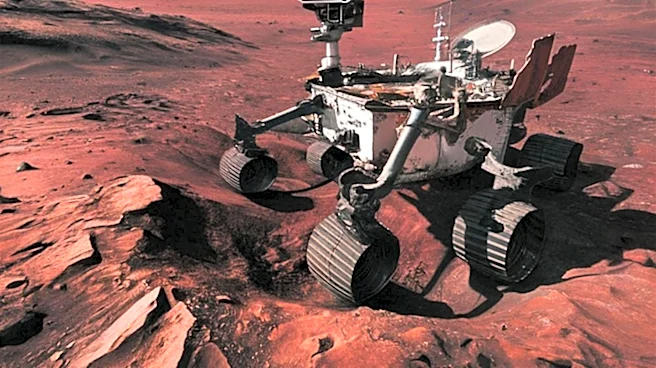
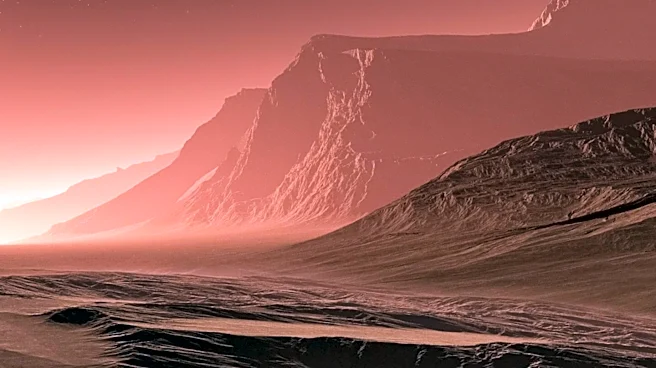
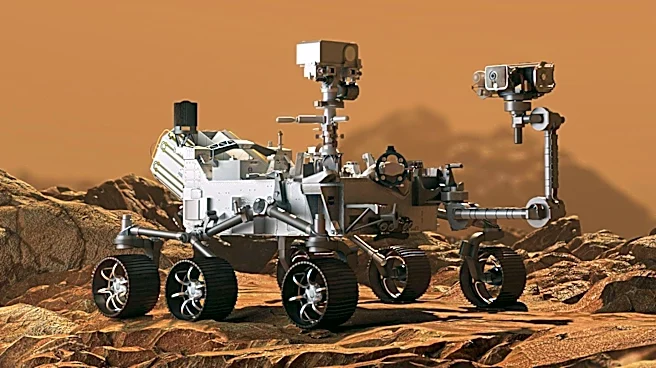
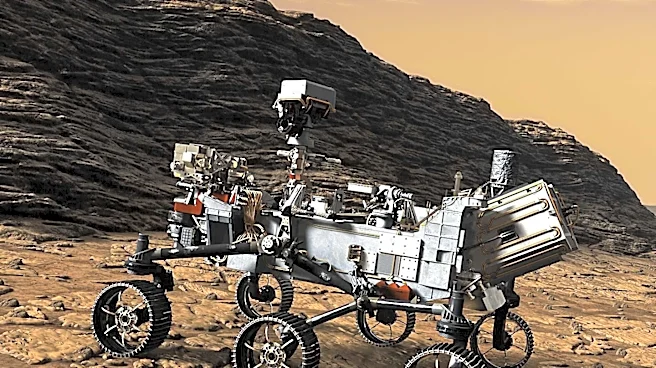
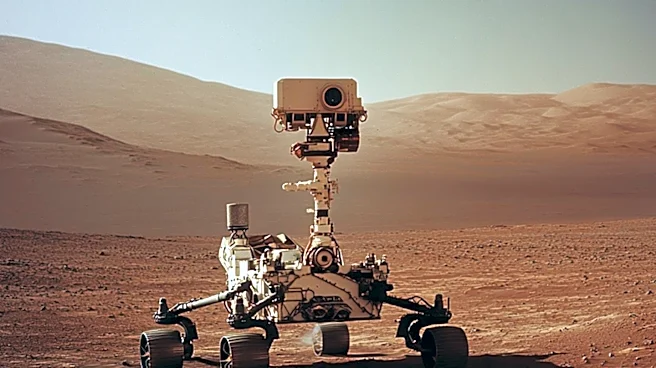
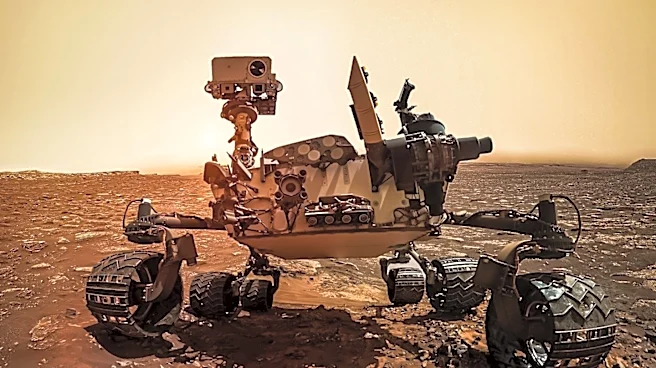
NASA's Curiosity rover has captured new images of honeycomb-like textures on the surface of Mars, known as polygonal fractures. These formations, measuring 1.5 to 3 inches wide, spread across the Martian landscape and wrap around a nearby butte. Scientists
are studying these features to understand their formation, which may provide insights into Mars' geological history and past environmental conditions. The discovery of these textures adds to the growing body of evidence about Mars' past, including signs of water and organic molecules that suggest the planet may have once supported life.
Why It's Important?
The images from Curiosity contribute to our understanding of Mars' geological history and the potential for past life on the planet. The presence of polygonal fractures and mud cracks suggests that Mars experienced cycles of wet and dry conditions, which are crucial for understanding the planet's climate history. This research is vital for future exploration and potential human colonization, as it informs scientists about the availability of resources like water. The findings also enhance our knowledge of planetary processes, offering comparisons to similar features on Earth.
Beyond the Headlines
The discovery of these textures on Mars raises questions about the planet's ability to support life in the past and the potential for future human habitation. It also highlights the importance of robotic exploration in uncovering the mysteries of our solar system. The ongoing research may lead to new theories about the evolution of Mars and its capacity to sustain life, influencing future missions and the search for extraterrestrial life. Additionally, the study of Mars' geology provides valuable insights into the processes that shape planetary bodies.