








What's Happening?
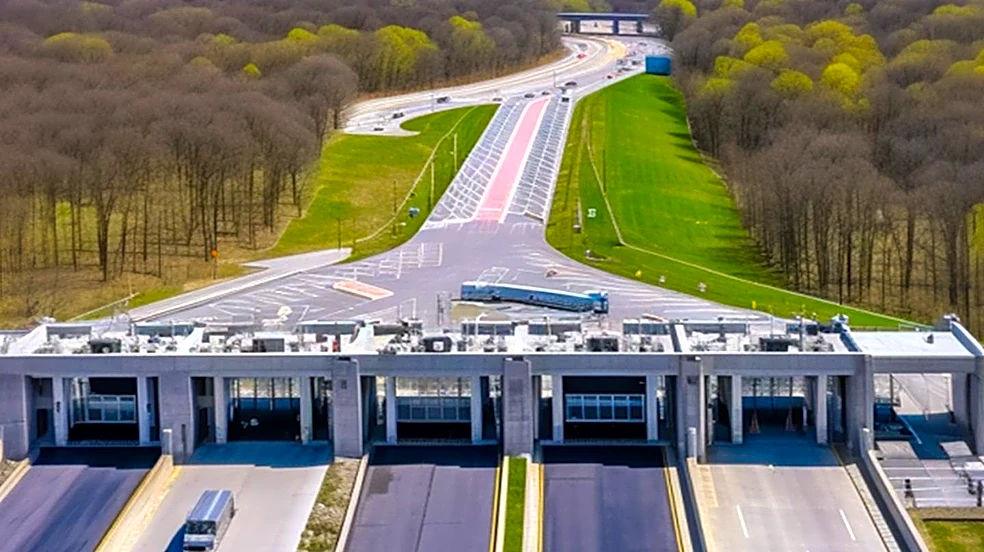
The Illinois Tollway's Interstate 490 project, part of the Elgin O'Hare Western Access Project, is experiencing substantial cost increases and delays. Originally estimated at $3.4 billion, the project's cost has now escalated to an estimated $4.3 billion.
The completion date has been pushed back from 2027 to 2029. This complex undertaking, described by Illinois Tollway spokesperson Joelle McGinnis as the most intricate in the agency's history, involves constructing a new road around the western side of O'Hare International Airport, connecting I-90, Route 390, and the Tri-State Tollway. A significant factor contributing to the rising costs is the challenging relocation of Union Pacific Railroad tracks near O'Hare. For instance, a contract with Lorig Construction Co. for track relocation, initially $107.4 million in 2021, has grown to $138.1 million due to numerous change orders.
Why It's Important?
The cost overruns and delays on the I-490 project have significant implications for Illinois taxpayers and commuters. The additional $900 million in expenses will likely be borne by tollway users through potential future toll increases or by diverting funds from other infrastructure projects. The extended timeline means that the anticipated benefits of improved traffic flow and reduced commute times for millions of suburbanites and Chicagoans will be delayed. This project is crucial for enhancing connectivity around O'Hare International Airport, a major economic hub, and its setbacks could impact regional economic efficiency. The challenges encountered, particularly with railroad relocation, highlight the complexities and potential financial risks associated with large-scale infrastructure developments, especially those involving multiple stakeholders and active operational environments like airports and railways.
What's Next?
While the overall project completion is now slated for 2029, a new I-490 and I-294 interchange in Franklin Park is expected to open later this week, providing some immediate relief for drivers. This interchange will facilitate movement from Franklin Avenue to southbound I-294 and from northbound I-294 to Franklin Avenue. The Illinois Tollway board will continue to review and approve change orders as unforeseen conditions and updated requirements from entities like Union Pacific Railroad arise. The ongoing adjustments to the project's scope and budget suggest that further financial revisions might be necessary. The focus will remain on managing the intricate logistics of working within regulated airspace and active rail environments to minimize disruptions and ensure the project's eventual completion.
Beyond the Headlines
The I-490 project's struggles underscore broader issues in large-scale public infrastructure development, including the difficulty of accurately forecasting costs and timelines for complex engineering feats. The need to coordinate with multiple entities, such as Union Pacific, CPKC, Metra, and the Federal Aviation Administration, introduces layers of regulatory and operational challenges that can lead to unexpected expenses and delays. The project's experience with evolving requirements from Union Pacific, even after initial designs, highlights the dynamic nature of such undertakings. This situation could prompt a re-evaluation of risk assessment and contingency planning for future major infrastructure projects in the U.S., emphasizing the importance of robust initial planning and flexible contractual agreements to mitigate unforeseen circumstances and protect public funds.