





What's Happening?
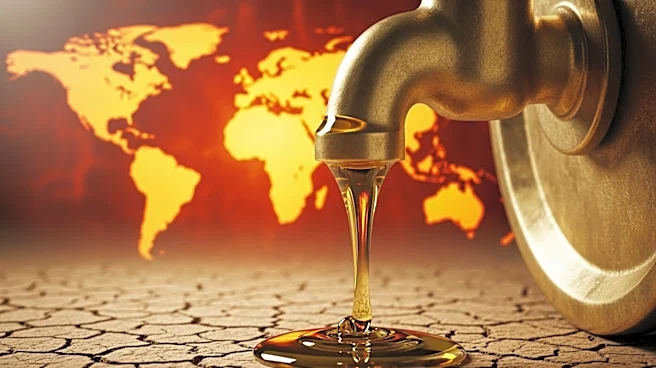
Rory Johnston, founder of Commodity Context, has expressed concerns over the extension of the ceasefire between the U.S. and Iran, describing it as a 'worst-case scenario' for the energy market. According to Johnston, the extension reduces the urgency
to resolve the ongoing oil crisis, while global oil stockpiles continue to deplete. He suggests that China is currently providing the necessary supply to support the physical oil market. However, Johnston warns that if China ceases to draw from its reserves, the market could face either demand destruction or an immediate tightening.
Why It's Important?
The extension of the U.S.-Iran ceasefire has significant implications for the global energy market, particularly in terms of oil supply and pricing. As stockpiles dwindle, the market's reliance on China's reserves highlights vulnerabilities in global oil supply chains. This situation could lead to increased volatility in oil prices, affecting industries reliant on stable energy costs. Additionally, the lack of resolution in the U.S.-Iran tensions may prolong geopolitical uncertainties, impacting investor confidence and economic stability in regions dependent on oil imports.
What's Next?
If China reduces its oil reserve drawdowns, the market may experience a supply shock, leading to potential price spikes. This could prompt major oil-consuming nations to seek alternative energy sources or increase domestic production. Additionally, the U.S. and Iran may face increased pressure to negotiate a more permanent resolution to their tensions, potentially involving other international stakeholders. The energy sector will likely monitor these developments closely, adjusting strategies to mitigate risks associated with supply disruptions.