




What's Happening?
China's Foreign Ministry Spokesperson Guo Jiakun has expressed strong opposition to any official interactions and contacts between countries with diplomatic ties to China and Taiwanese officials. This statement comes after reports that some Panamanian
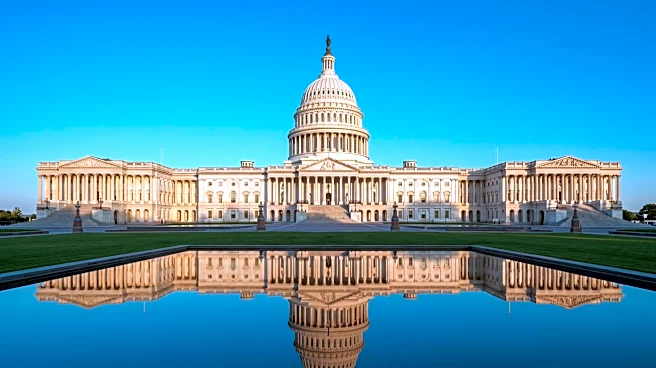
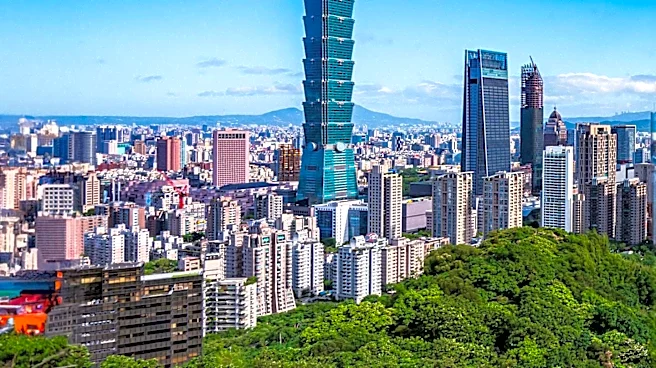
lawmakers established a 'Panama-Taiwan parliamentary friendship group,' with U.S. lawmakers reportedly participating in its opening via video link. Guo emphasized that no external force would be allowed to interfere in China's internal affairs. Panama's President Jose Raul Mulino clarified that foreign relations fall under the executive branch's authority, and the lawmakers' contacts with Taiwan do not imply government approval. Guo reiterated that there is only one China, and Taiwan is an inseparable part of Chinese territory. He warned that crossing the line on the Taiwan issue would lead to serious consequences and urged Panama to uphold its commitment to the one-China principle through concrete actions to protect the political foundation of China-Panama relations. The spokesperson also called on the U.S. to adhere to the one-China principle and the three joint communiqués between China and the U.S., to cease sending incorrect signals to 'Taiwan independence' separatist forces, and to stop undermining China-Panama relations.
Why It's Important?
This development highlights the ongoing international tension surrounding Taiwan's status and China's 'One-China' policy. For the U.S., involvement of its lawmakers in such a group, even virtually, can be seen by China as a violation of its commitments and a challenge to its sovereignty claims over Taiwan. This could strain U.S.-China relations, particularly as the U.S. navigates its strategic ambiguity towards Taiwan while also maintaining diplomatic ties with Beijing. Economically, any escalation in tensions could impact global trade and supply chains, given China's central role in the world economy. Politically, it underscores the delicate balance many nations, including Panama, must strike between maintaining relations with China, a major economic power, and engaging with Taiwan, a democratic entity with significant international support. The incident also reflects China's assertive stance in enforcing its 'One-China' principle globally, pressuring countries to limit interactions with Taiwan to non-official capacities.
What's Next?
China will likely continue to monitor interactions between other nations' officials and Taiwan, issuing strong condemnations for any perceived breaches of the 'One-China' principle. The U.S. may face further diplomatic pressure from Beijing regarding its engagement with Taiwan, potentially leading to increased rhetoric or retaliatory measures. Panama's government will need to carefully manage its foreign policy to avoid jeopardizing its relationship with China, especially given President Mulino's statement that the lawmakers' actions do not reflect government approval. This could involve issuing clearer guidelines for parliamentary interactions with Taiwan or reaffirming its commitment to the 'One-China' policy. The incident may also prompt other countries to re-evaluate their own unofficial engagements with Taiwan to avoid similar diplomatic disputes with China. The broader international community will be watching to see if this event leads to a more formalized or coordinated response from China regarding Taiwan's international presence.
Beyond the Headlines
The incident underscores the complex and often contradictory nature of international diplomacy concerning Taiwan. While many nations, including the U.S., officially acknowledge the 'One-China' policy, unofficial engagements with Taiwan persist due to shared democratic values, economic ties, and strategic interests. This creates a constant diplomatic tightrope walk, where symbolic gestures can carry significant geopolitical weight. The formation of 'friendship groups' by lawmakers, even if not officially sanctioned by their governments, can be interpreted by China as a deliberate provocation, testing the boundaries of the 'One-China' principle. This highlights a deeper struggle between China's territorial claims and Taiwan's desire for international recognition and self-determination. The involvement of U.S. lawmakers, even through video, further complicates the narrative, suggesting a potential divergence between executive and legislative approaches to foreign policy, or a deliberate signal of support for Taiwan despite official diplomatic constraints.