







What's Happening?
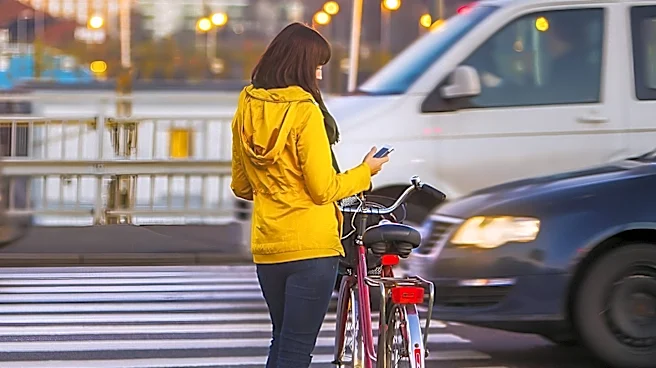
New Mexico has been ranked as the deadliest state for pedestrians in 2025, according to a report by the Governors Highway Safety Association (GHSA). The state had briefly improved its ranking to ninth mid-year but ended the year with 91 pedestrian fatalities,
placing it at the top with a rate of 4.27 deaths per 100,000 people. This marks a slight improvement from 2024, which saw 102 pedestrian deaths. The Albuquerque area accounted for nearly half of these fatalities. Efforts to improve pedestrian safety include the city's $5 million investment in infrastructure projects along Central Avenue, a high-risk area. These projects involve installing high-intensity activated crosswalks, solar-powered street lights, and metal fencing to prevent jaywalking.
Why It's Important?
The high rate of pedestrian fatalities in New Mexico highlights significant safety challenges and the need for effective interventions. The financial implications are substantial, with costs related to pedestrian deaths, including medical and legal expenses, reaching $1.2 billion in 2024. The state's efforts to reduce these fatalities are crucial for public safety and economic reasons. The focus on infrastructure improvements and educational initiatives aims to create safer environments for pedestrians and reduce the burden on healthcare and legal systems. The situation underscores the importance of continued investment in road safety and the need for comprehensive strategies to protect vulnerable road users.
What's Next?
New Mexico plans to continue its efforts to improve pedestrian safety through various initiatives. The state is set to implement a requirement in 2027 for driver's education classes to include lessons on interacting safely with pedestrians. Additionally, the state is enhancing its consideration of all transportation modes in safety projects and conducting road safety audits focused on vulnerable road users. These initiatives are part of a broader strategy to achieve the state's Target Zero program, which aims to eliminate traffic deaths by 2050. The effectiveness of these measures will be evaluated over time to ensure they contribute to a sustained reduction in pedestrian fatalities.