







What's Happening?
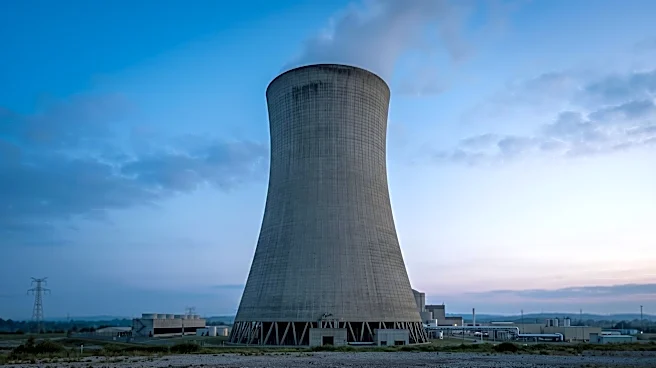
The SNR-300 fast breeder reactor in Kalkar, Germany, completed in 1985, never produced commercial electricity due to a political decision in 1991 to deny its operating license. The project, which cost approximately 7 billion German marks and was 68.5%
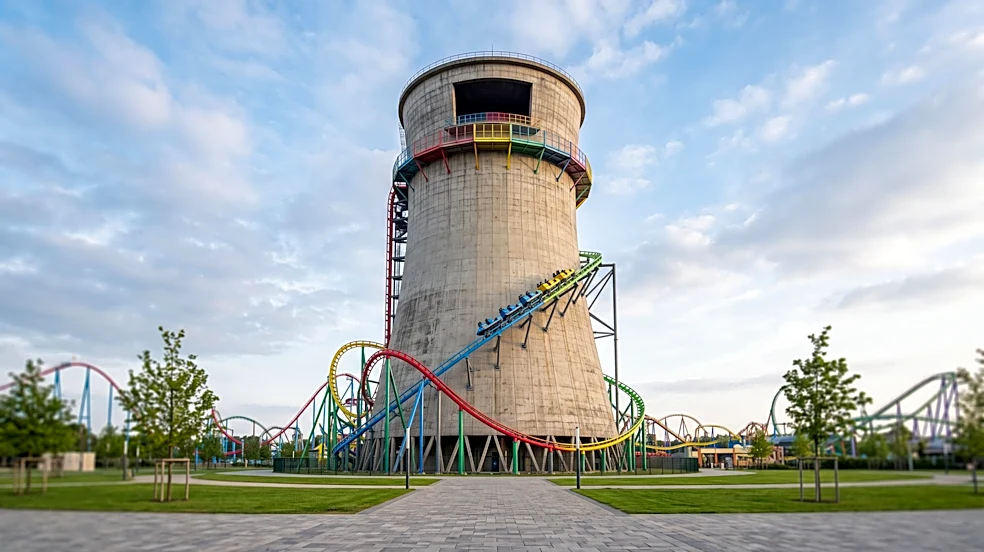
funded by Germany with contributions from Belgium, the Netherlands, and the United Kingdom, was intended to generate 300 megawatts of electricity using plutonium. Anti-nuclear opposition, including a large demonstration in 1977 and renewed fears after the 1986 Chernobyl disaster, significantly influenced public opinion and political decisions. In 1995, Dutch entrepreneur Hennie van der Most purchased the site and transformed it into an amusement park called Wunderland Kalkar, which now attracts around 600,000 visitors annually and employs approximately 550 people during peak season. The former cooling tower now houses a ride, becoming a central attraction.
Why It's Important?
The transformation of the SNR-300 reactor into an amusement park highlights the significant impact of political and social realities on large-scale industrial projects, particularly in the nuclear energy sector. This case demonstrates how strong anti-nuclear sentiment, fueled by public protests and major incidents like Chernobyl, can lead to the abandonment of fully constructed and technically operational facilities. The financial investment of billions of marks, ultimately yielding no energy output, underscores the economic risks associated with projects facing substantial public and political opposition. The repurposing of the site into a successful amusement park also offers a unique example of how industrial failures can be creatively re-envisioned, providing economic benefits through tourism and employment, rather than becoming derelict industrial wastelands. This situation reflects the complex interplay between technological ambition, public acceptance, and governmental policy in shaping national infrastructure and energy strategies.
What's Next?
The Wunderland Kalkar amusement park continues to operate, serving as a unique example of industrial repurposing. The site's ongoing success suggests a potential model for other abandoned industrial facilities, particularly those with significant public or historical interest. As debates about nuclear power and energy transition continue globally, the story of Kalkar may serve as a historical case study illustrating the profound influence of public sentiment and political will on energy infrastructure development. Future discussions on nuclear energy policy, especially in countries considering new reactor constructions or the decommissioning of existing ones, might draw lessons from the SNR-300's fate regarding the importance of public engagement and political consensus in project viability.
Beyond the Headlines
The story of the SNR-300 reactor delves into the deeper implications of societal values and political decisions on technological progress. It underscores that even with significant financial investment and advanced engineering, a project's ultimate success hinges on its social and political acceptance. The transformation into an amusement park also raises questions about the long-term utility and ethical considerations of large-scale industrial structures that become obsolete. It highlights a unique form of 'recycling' where a symbol of technological ambition and subsequent failure is recontextualized for public entertainment, inadvertently preserving a piece of industrial history while generating new economic activity. This narrative challenges the conventional view of industrial waste, suggesting that with creative vision, even the most monumental failures can find an unexpected second life, reflecting a broader cultural shift in how societies interact with their industrial past.