

What's Happening?
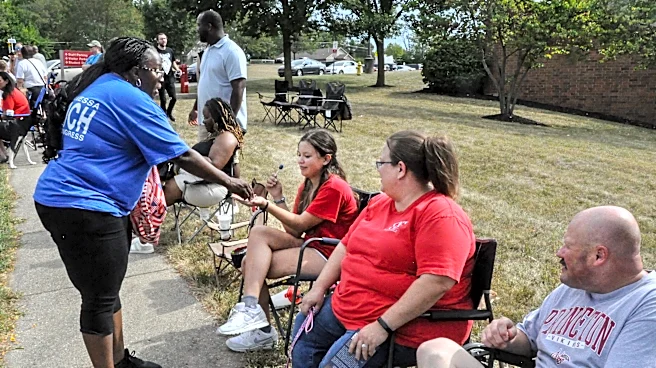
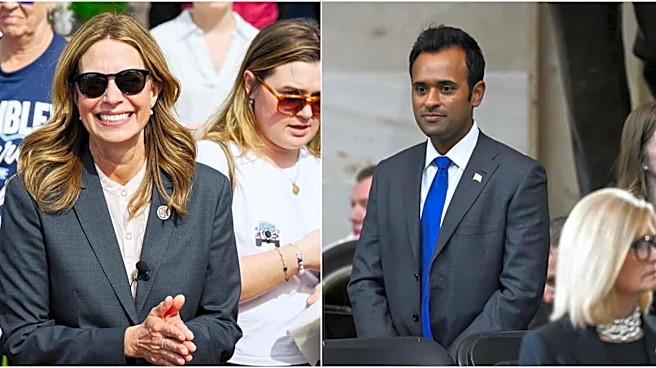
U.S. Representative Ben Cline, the Republican incumbent for Virginia's 6th Congressional District, participated in a congressional candidate event in Winchester, Virginia, without his Democratic opponent, Beth Macy. The event, hosted by the Small Business
Freedom Alliance at West Oaks Farm & Market, was initially planned as a debate but proceeded as a discussion with only Cline present. Cline's campaign characterized this as the first of three debates he has agreed to attend for the 2026 campaign. According to Cline's campaign, Macy had publicly called for three debates in recent weeks, but her campaign did not provide a statement explaining her absence from this specific event. Without both candidates, voters at the Winchester event were unable to hear a direct debate or compare responses to the same questions. Cline discussed issues such as taxes, the cost of living, immigration, border security, public safety, small businesses, farmers, and veterans' benefits.
Why It's Important?
The absence of one candidate from a scheduled debate or candidate forum is significant as it deprives voters of a direct comparison between those vying for public office. Debates offer a crucial opportunity for the electorate to assess candidates' positions on key issues, observe their demeanor under pressure, and understand how they might respond to opposing viewpoints. When only one candidate is present, the event transforms into an unopposed platform, allowing the attending candidate to present their views and record without immediate challenge or rebuttal. This can influence voter perception by limiting the scope of information available and potentially skewing the narrative in favor of the present candidate. For the 6th Congressional District, this means voters missed an opportunity to directly contrast Cline's and Macy's stances on critical issues affecting their community, such as economic policies, immigration, and healthcare, ahead of the November election.
What's Next?
The disagreement between the campaigns regarding debate participation is expected to continue as the November election approaches. Cline's campaign has indicated he has accepted invitations to two more events: one hosted by the Salem Rotary Club on September 10 and another with the Harrisonburg Rotary Club on October 5. It remains unclear whether Beth Macy will attend these events. Macy's campaign manager, Wynn Morris, stated that Macy had a prior scheduling conflict for the Winchester event and had informed the Small Business Freedom Alliance on August 15. Morris also mentioned that Macy had accepted an invitation from Cardinal News to debate Cline at Roanoke College in September, but Cline had not agreed to participate in that specific format, which Macy's campaign prefers due to its moderated structure and rebuttal time. The campaigns will likely continue to negotiate or publicly dispute the terms and formats of future candidate appearances, impacting how voters receive information.
Beyond the Headlines
This situation highlights a broader trend in modern political campaigning where the format and terms of candidate debates have become a point of contention. Campaigns often strategically choose which events to attend and under what conditions, aiming to maximize their candidate's exposure while minimizing potential risks. The preference for candidate forums over moderated debates, or vice versa, reflects differing campaign strategies regarding direct engagement and message control. For voters, this can lead to a fragmented understanding of candidates' platforms, as they may not get a comprehensive, side-by-side comparison of policy positions and leadership styles. The evolving landscape of political discourse, influenced by media strategies and campaign tactics, underscores the challenge of ensuring informed public participation in democratic processes, particularly when direct, unmediated exchanges between candidates become less common.