



What's Happening?
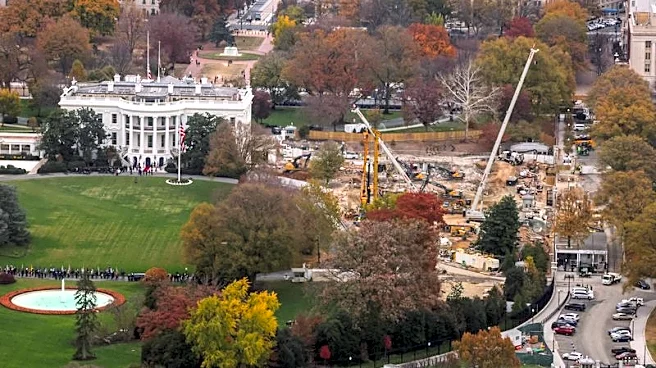
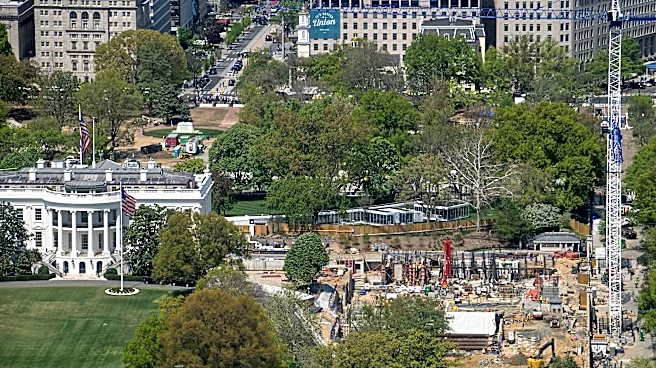
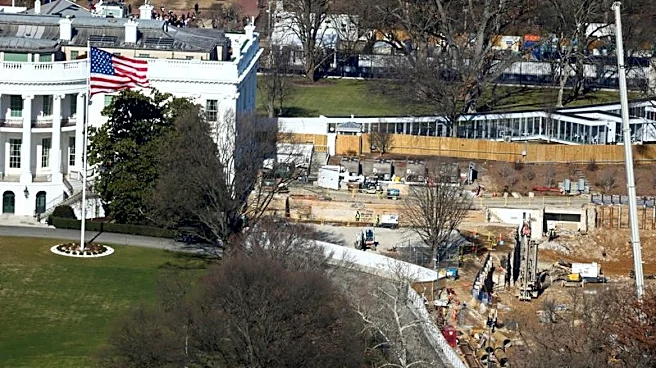
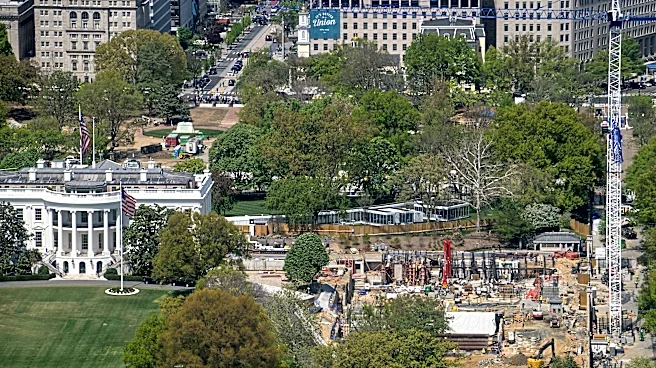
A federal appeals court has temporarily allowed President Trump to continue the construction of a $400-million ballroom at the White House. This decision comes after a lower court had blocked above-ground construction on the site of the former East Wing.
The U.S. Court of Appeals for the District of Columbia Circuit issued a temporary hold on the order by U.S. District Judge Richard Leon, who had previously halted part of the project. The appeals court has scheduled a hearing for June 5 to further review the case. The National Trust for Historic Preservation had sued to stop the project, arguing that President Trump overstepped his authority by proceeding without necessary approvals from federal agencies and Congress. Despite the legal challenges, underground work on a bunker and other national security facilities is allowed to continue.
Why It's Important?
The construction of the ballroom at the White House is significant as it highlights ongoing tensions between historical preservation efforts and new developments within iconic U.S. landmarks. The project has sparked legal battles over presidential authority and the processes required for such significant alterations to historic sites. The outcome of this case could set a precedent for how future administrations approach modifications to national landmarks. Additionally, the funding of the project, which involves donations from wealthy individuals and corporations, raises questions about the influence of private money in public projects and the transparency of such funding sources.
What's Next?
The scheduled hearing on June 5 will be crucial in determining the future of the ballroom construction. Depending on the court's decision, the project could either proceed as planned or face further legal obstacles. Stakeholders, including historic preservation groups and federal agencies, will likely continue to monitor and potentially challenge the project's progress. The decision could also prompt discussions in Congress regarding the oversight and approval processes for modifications to national landmarks.