





What's Happening?
The University of Galway has joined Rumen-Innovate, a multinational research project aimed at advancing sustainable ruminant agriculture through microbiome science. This consortium, comprising 11 universities, research bodies, farming organizations, and
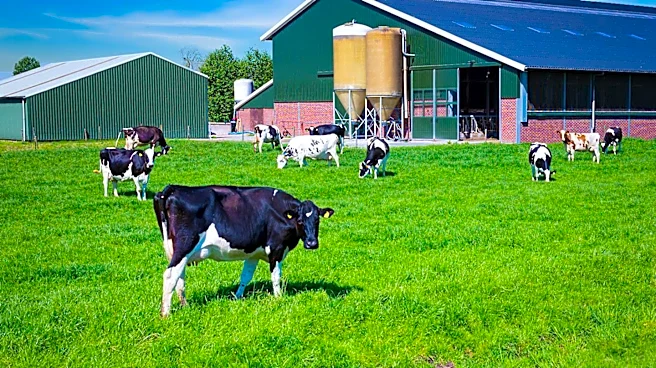
industry partners across eight European countries, is focused on training the next generation of ruminant microbiome scientists. Funded by the EU's Horizon Europe Marie Skłodowska-Curie Actions programme with €4.8 million, the project's core objectives are to promote cleaner air, more sustainably produced food, and healthier animals. University of Galway will host two doctoral students specializing in ruminant microbiome science to develop technologies for mitigating greenhouse gas emissions and improving sustainable agriculture. The research specifically targets improving animal health, boosting feed efficiency, and reducing agricultural methane emissions, recognizing that cattle and sheep are significant sources of methane, a potent greenhouse gas.
Why It's Important?
This multinational project holds significant importance for global efforts to combat climate change and enhance food security, with potential implications for U.S. agricultural practices. The U.S. livestock sector, particularly cattle farming, is a major contributor to greenhouse gas emissions, and advancements in sustainable ruminant agriculture developed through projects like Rumen-Innovate could offer valuable solutions. The research into improving animal health and feed efficiency, alongside reducing methane emissions, directly addresses critical challenges faced by the U.S. agricultural industry. Successful implementation of these technologies could lead to more environmentally friendly and economically viable livestock farming practices in the U.S., potentially influencing policy decisions regarding agricultural subsidies, environmental regulations, and research funding. Furthermore, the training of highly skilled researchers in ruminant microbiome science could foster international collaboration and knowledge exchange, benefiting U.S. scientific and agricultural communities in their pursuit of sustainable food production.
What's Next?
The Rumen-Innovate project will continue its research and training initiatives, with University of Galway hosting doctoral students focused on developing greenhouse gas mitigation technologies. The consortium aims to produce highly skilled researchers and technologies with real-world impact for the livestock sector. Over the coming years, the project is expected to generate new insights and practical solutions for reducing methane emissions from ruminant animals, improving animal health, and enhancing feed efficiency. These developments could lead to the adoption of new farming techniques and feed additives across Europe and potentially influence agricultural practices globally, including in the U.S. The project's success could also pave the way for further international collaborations and funding for research into sustainable agriculture, as the urgency to address climate change and food security continues to grow.
Beyond the Headlines
Beyond the immediate scientific and agricultural advancements, this project highlights a deeper shift in how the global community views and addresses the environmental impact of food production. The focus on microbiome science underscores a growing understanding of the intricate biological processes that contribute to greenhouse gas emissions and offers a novel avenue for intervention. This initiative also reflects a broader trend towards interdisciplinary and international collaboration in tackling complex global challenges like climate change. The emphasis on training the next generation of scientists suggests a long-term commitment to sustainable agriculture, recognizing that systemic changes require sustained research and expertise. Ethically, the project implicitly acknowledges the responsibility of the agricultural sector to minimize its environmental footprint while continuing to meet global food demands, prompting a re-evaluation of traditional farming methods in favor of more ecologically conscious approaches.