



What's Happening?
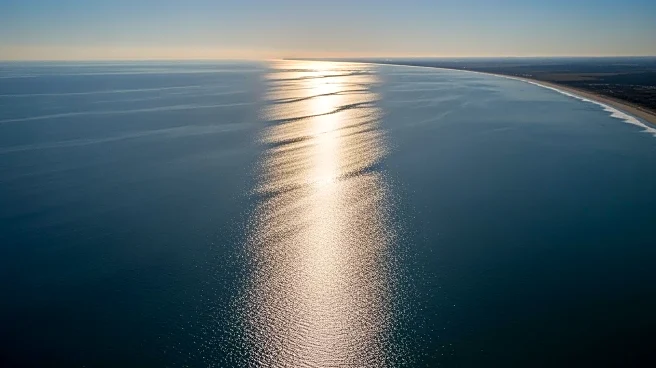
A recent photograph taken by an astronaut aboard the International Space Station (ISS) has captured a rare 'moonglint' phenomenon between the Florida peninsula and Cuba. This event, which is not visible from the ground, occurs when moonlight reflects
off a water surface at the same angle as the observer's view. The image, taken at 2:23 a.m. Eastern time, shows the bright lights of Miami, Orlando, Tampa, Cape Coral, and Havana, Cuba. The ISS, an orbiting laboratory for international scientific research, is located approximately 248 miles above Earth. The photograph highlights the improved quality of space photography, allowing for the observation of phenomena previously unseen.
Why It's Important?
The photograph underscores the advancements in space photography and the ability to capture unique natural phenomena from space. Such images contribute to our understanding of Earth's geography and atmospheric conditions. The ISS serves as a symbol of international cooperation in space exploration, providing a platform for scientific research that benefits multiple countries. The ability to capture and study these phenomena can enhance meteorological and environmental research, offering insights into Earth's natural processes and aiding in the development of technologies for monitoring and protecting the planet.
What's Next?
The future of the ISS remains uncertain due to geopolitical tensions, particularly following Russia's invasion of Ukraine in 2022. The station's role in space diplomacy is expected to grow, as it continues to be a strategic asset for international collaboration. The ongoing cooperation among nations aboard the ISS may influence future space policies and agreements, potentially impacting global scientific research and exploration efforts.