


What's Happening?
The U.S. Senate is set to vote on a bipartisan war powers resolution aimed at curbing President Trump's military actions against Iran. The resolution seeks to require congressional authorization for any hostilities, reflecting an effort by some lawmakers
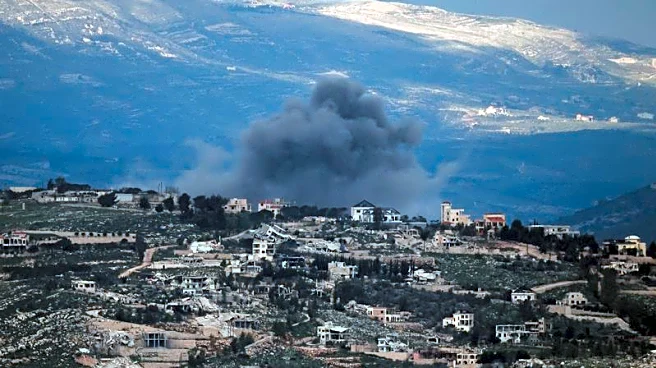
to reclaim Congress's constitutional role in declaring war. This move comes amid ongoing military operations in Iran, which have already resulted in significant regional damage and U.S. casualties. The resolution is backed by Democrats and a few Republicans, who argue that it is crucial for Congress to have a say in military engagements. However, Republican leaders, who hold slim majorities in both chambers, have expressed opposition, viewing the resolution as a potential risk to national security.
Why It's Important?
The resolution represents a significant challenge to presidential war powers, highlighting ongoing tensions between the executive and legislative branches over military authority. If passed, it could set a precedent for future military engagements, potentially altering the balance of power in U.S. foreign policy decision-making. The debate also underscores broader concerns about the scope and oversight of U.S. military operations, particularly in volatile regions like the Middle East. The outcome of the vote could influence U.S. military strategy and diplomatic relations, as well as impact domestic political dynamics ahead of upcoming elections.
What's Next?
The House of Representatives is expected to vote on the resolution following the Senate's decision. Even if the resolution passes both chambers, it would require a two-thirds majority to override an anticipated veto from President Trump. The ongoing conflict in Iran may continue to shape congressional debates and public opinion on military engagement and executive authority. Lawmakers may revisit the resolution if the situation in Iran escalates or if public pressure mounts for greater congressional oversight of military actions.