


What's Happening?
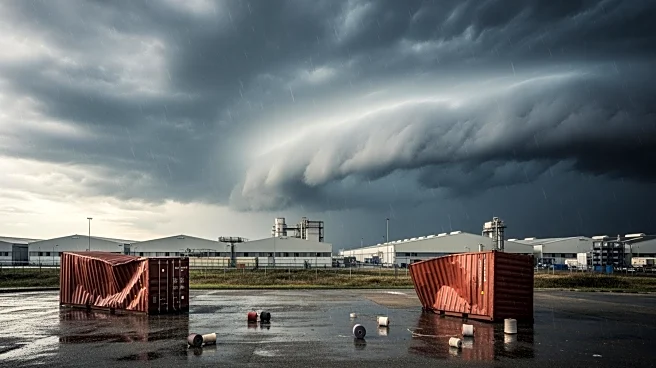
A recent cyclone in Sri Lanka has caused significant disruption to 15 large garment factories, primarily located in the western and southern provinces. The Joint Apparel Association Forum (JAAF), the main industry body in Sri Lanka, reported damage to buildings,
machinery, and inventory due to the cyclone and subsequent flash floods. The severe weather conditions led to temporary halts in operations at several factories due to power outages and unsafe working conditions. Additionally, transport disruptions have prevented many employees from returning to work, with an estimated 20% of workers in flood-affected areas still unable to resume their duties. While most factories have resumed operations, some continue to face challenges related to access and infrastructure, delaying full recovery.
Why It's Important?
The disruption in Sri Lanka's garment factories highlights the vulnerability of the global apparel supply chain to climate-driven extreme weather events. Sri Lanka's apparel sector, already under pressure from weakened global demand and economic challenges, faces additional strain from these disruptions. The cyclone's impact underscores the need for the industry to enhance resilience against such events, which are becoming more frequent and severe. The situation also emphasizes the human cost of climate disruptions, as many workers are unable to return to work, affecting their livelihoods. The ongoing challenges in Sri Lanka could have ripple effects on global fashion brands that rely on these factories for production, potentially leading to delays and increased costs.
What's Next?
Efforts are underway to support recovery and provide emergency assistance to affected workers and communities. The JAAF is collaborating with government authorities to offer real-time information on affected employees and support national relief efforts. Companies are providing essential supplies, including food, clothing, and temporary shelter, to displaced workers and their families. As the industry works towards recovery, there may be increased focus on developing strategies to mitigate the impact of future climate-related disruptions. This could involve investing in more resilient infrastructure and diversifying supply chains to reduce dependency on vulnerable regions.