


What's Happening?
Climate scientists are warning that a 'super' El Niño, characterized by significantly warmer sea surface temperatures, is expected to bring a wet winter to the western and southeastern United States. The National Oceanic and Atmospheric Administration
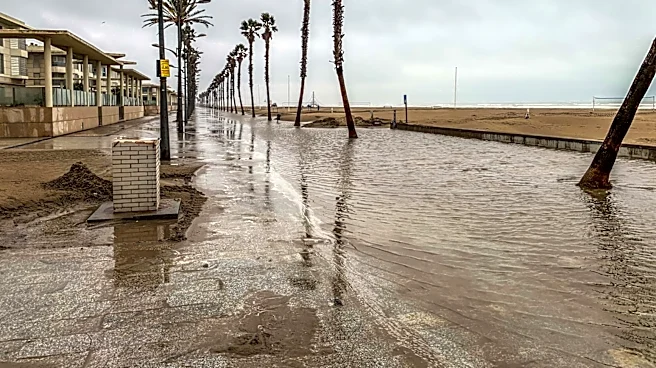
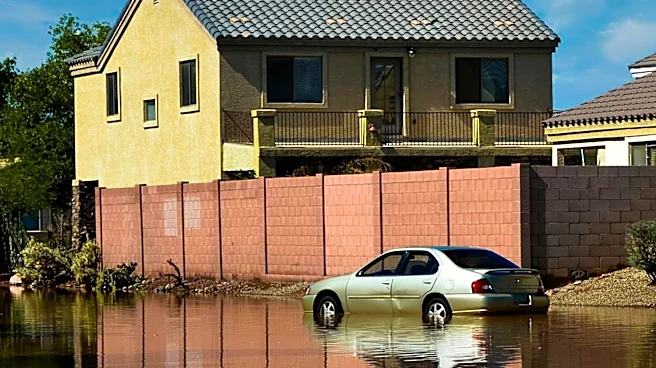
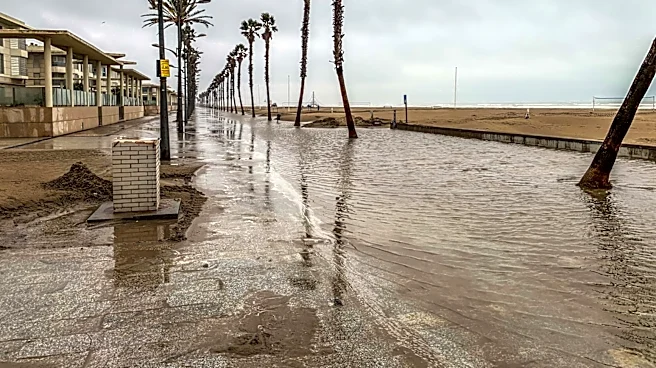
(NOAA) predicts that this El Niño will be the strongest of the century, potentially leading to increased precipitation and flooding in coastal areas. California, in particular, faces a high probability of above-average rainfall, which could exacerbate existing drought conditions in the southwest. Historical data shows that past El Niño events have caused significant damage, including coastal erosion and flooding.
Why It's Important?
The anticipated El Niño could have widespread impacts on infrastructure, agriculture, and communities across the affected regions. Increased rainfall and flooding pose risks to homes, roads, and public safety, potentially leading to economic losses and displacement. For areas already experiencing drought, the additional rainfall could provide some relief, but it also raises the risk of severe flooding. The event serves as a reminder of the vulnerabilities associated with climate variability and the need for preparedness and adaptation strategies to mitigate potential damages.
What's Next?
As the El Niño event develops, state and local governments may need to implement emergency response plans and infrastructure improvements to manage the anticipated impacts. Communities in high-risk areas might be advised to prepare for potential evacuations and property protection measures. Scientists and policymakers will continue to monitor the situation closely, using it as an opportunity to assess and improve climate resilience strategies. The event also highlights the importance of ongoing research and investment in climate science to better predict and respond to such natural phenomena.