






What's Happening?
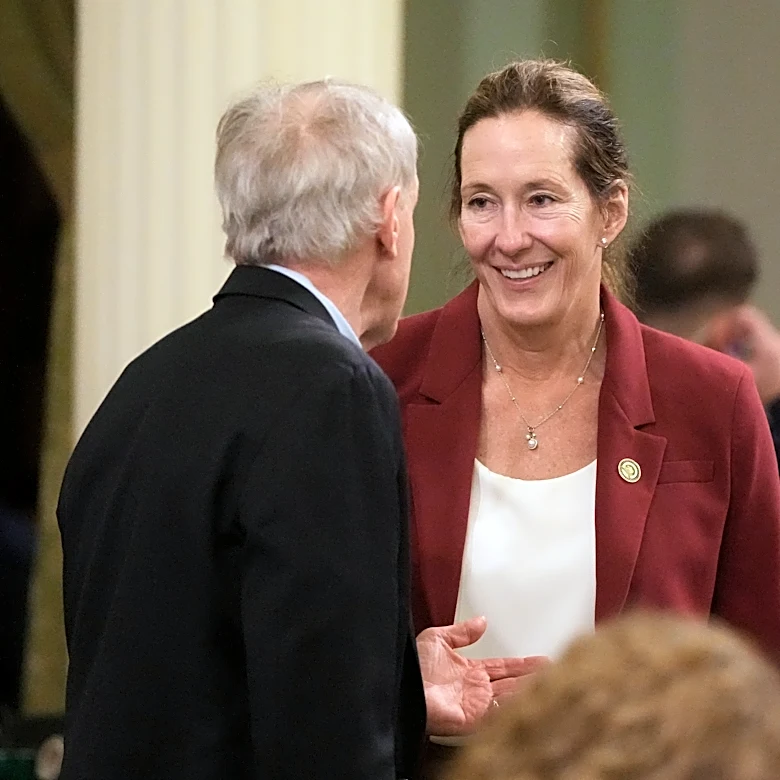
Congressman Riley M. Moore has announced his cosponsorship of the Ratepayer Protection Act, legislation introduced by Congressman Gabe Evans. This bill aims to ensure that data centers, rather than American families and small businesses, bear the full
costs associated with the electricity infrastructure upgrades required to meet their substantial energy demands. The legislation proposes an amendment to the Public Utility Regulatory Policies Act of 1978 (PURPA), mandating state public utility commissions to consider standards that require large data centers to pay for the incremental generation, transmission, and distribution upgrades necessary for their operations. Congressman Moore emphasized that West Virginia families and American taxpayers should not subsidize the infrastructure costs of these massive facilities, advocating for the costs to be borne by the companies themselves.
Why It's Important?
The Ratepayer Protection Act addresses a critical issue arising from the rapid expansion of data centers and artificial intelligence infrastructure: the potential for increased electricity costs to be passed on to ordinary consumers. Data centers are significant energy consumers, and their growing demand places considerable strain on existing power grids, often necessitating costly upgrades. Without specific legislation, these upgrade costs could be absorbed by the general ratepayer base, effectively subsidizing the operations of large technology companies. This bill is important because it seeks to establish guardrails to protect consumers, ensuring that the financial burden of supporting data center energy needs falls on the entities that generate that demand. It also aims to preserve state and local control over data center projects by allowing state regulators to determine how these cost-sharing standards are implemented, thereby preventing a federal mandate from overriding local economic considerations and energy policies.
What's Next?
The Ratepayer Protection Act will proceed through the legislative process in Congress. Its passage would require state public utility commissions to develop and implement standards for data centers to cover their incremental infrastructure costs. This could lead to a significant shift in how data center projects are financed and integrated into local power grids, potentially making developers more accountable for their energy footprint. If enacted, the legislation would empower state regulators to ensure that the expansion of data centers aligns with the financial interests of local ratepayers. The bill's progress will likely involve debates over its economic impact on the technology industry, its effectiveness in protecting consumers, and the balance of power between federal, state, and local authorities in energy regulation. Its success could set a precedent for how other energy-intensive industries are regulated in the context of infrastructure demands.
Beyond the Headlines
This legislation touches upon broader themes of corporate responsibility, infrastructure investment, and the equitable distribution of costs associated with technological advancement. As the digital economy expands, the physical infrastructure required to support it—particularly energy-intensive data centers—becomes a critical point of contention. The debate over who pays for these essential upgrades highlights a tension between fostering technological innovation and protecting the economic well-being of everyday citizens. By advocating for data centers to internalize their infrastructure costs, the bill challenges the notion that the public should automatically subsidize private sector growth, especially when that growth has significant environmental and economic externalities. This move could encourage more sustainable and efficient data center development, as companies would have a direct financial incentive to minimize their energy demands and associated infrastructure burdens. It also reinforces the principle of local and state autonomy in managing their energy resources and protecting their constituents from unforeseen financial liabilities.