







What's Happening?
A federal judge in the U.S. District Court for the Northern District of Texas, Judge Reed O’Connor, has invalidated a rule by the Bureau of Alcohol, Tobacco, Firearms, and Explosives (ATF) concerning 'ghost guns' and 3D printed parts. The ATF rule, enacted
in 2022, mandated that part kits readily convertible into functional firearms, frames, or receivers be subject to the same regulations as complete guns. This included requirements for background checks on purchasers of such kits, clear definitions of firearm frames or receivers, and serial numbering for certain gun parts. The rule also extended record-keeping requirements for gun sellers and gunsmiths. Judge O’Connor ruled that the ATF's regulation contradicts the historical tradition of personal gunsmithing and that its vagueness violates the Due Process Clause of the Fifth Amendment. He cited historical context, noting that restrictions on self-built arms were not longstanding in early America, where gunsmithing was a common practice without federal regulation.
Why It's Important?
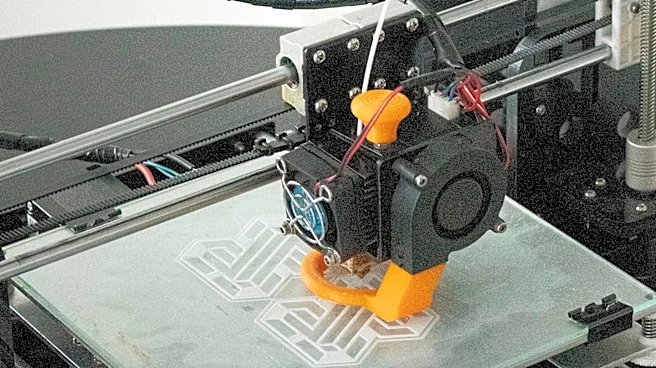
This ruling has significant implications for the 3D printing community and gun rights advocates, potentially easing restrictions on the creation of privately manufactured firearms. The ATF rule was designed to control 'ghost guns,' which are untraceable and increasingly used in crimes, making them a concern for law enforcement and public safety. The judge's decision, however, prioritizes the historical right to personal gunsmithing and due process, potentially making it more challenging for states to regulate 3D printed gun components. This creates a legal conflict, as several states, including California, Colorado, New York, and Washington State, have been actively implementing bans and limitations on 3D printers to curb ghost gun proliferation. The decision could empower individuals to produce firearms without traditional oversight, raising questions about gun control effectiveness and the balance between individual liberties and public safety.
What's Next?
The ruling by Judge O’Connor is likely to face an appeal. The U.S. Supreme Court previously upheld the ATF regulation in March of last year, though Justice Neil Gorsuch noted that future cases might present more complex questions regarding the ATF's regulations. It is anticipated that this case will be challenged before the U.S. Court of Appeals for the Fifth Circuit and could eventually return to the Supreme Court for a definitive ruling on the constitutionality of regulating 3D printed gun parts. In the interim, the 3D printing community and gun manufacturers will closely monitor these legal developments, as the outcome will determine the future landscape of DIY gunsmithing and the regulatory authority of federal agencies over firearm components. State-level efforts to restrict ghost guns may also be impacted, potentially leading to further legal challenges and legislative adjustments.
Beyond the Headlines
The debate surrounding 3D printed firearms extends beyond legal and regulatory frameworks, touching upon the evolving nature of manufacturing, personal freedoms, and national security. The ability to produce functional firearm components at home using 3D printers challenges traditional gun control mechanisms that rely on commercial sales and serial numbers. This technological advancement introduces a new dimension to the Second Amendment debate, as it allows for the creation of weapons outside conventional supply chains, making them difficult to track and regulate. The ruling also highlights a broader tension between technological innovation and governmental attempts to maintain control and ensure public safety. The concept of 'personal gunsmithing' in the digital age raises ethical questions about the accessibility of weapon manufacturing and the potential for misuse, pushing legal systems to adapt to rapidly changing technological capabilities.