








What's Happening?
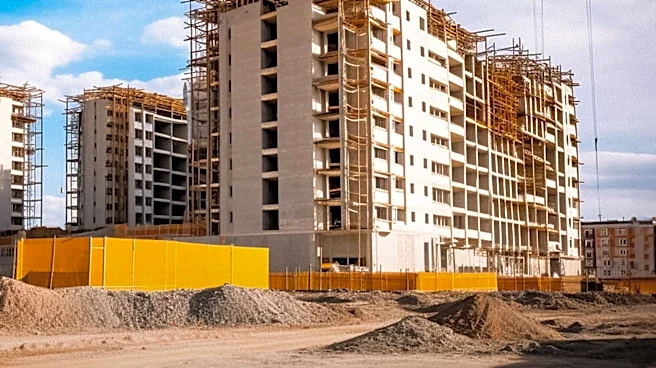
Hawaii state officials and community leaders have initiated the first phase of the Mayor Wright Homes redevelopment project, marking the largest public housing redevelopment in the state. The 15-acre site in the Kalihi-Palama neighborhood, near downtown
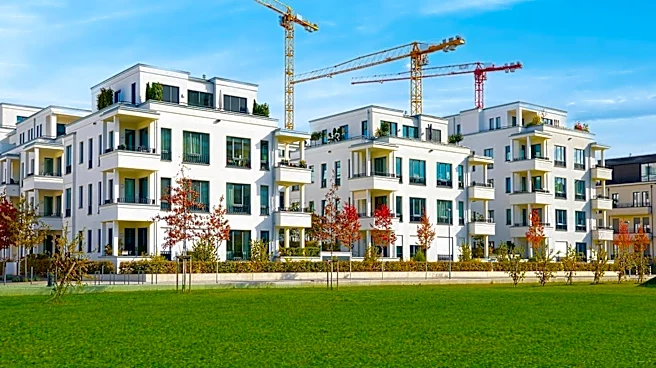
Honolulu, will be transformed from its nearly 75-year-old state into a complex designed for mixed-income residents. The project, a collaboration between the Hawaiʻi Public Housing Authority (HPHA) and developer Highridge Costa, aims to construct over 2,400 new rental units, including studios to five-bedroom apartments, public housing units, condos for sale, and commercial spaces, spread across 10 towers. Hakim Ouansafi, executive director of the HPHA, emphasized that the initiative is about "breaking barriers" and moving beyond outdated solutions for housing challenges. Governor Josh Green highlighted the connection between stable housing and overall well-being, stating that "Housing provides health."
Why It's Important?
This redevelopment project is crucial for addressing Hawaii's significant housing challenges, particularly for low-income and mixed-income residents. By building seven times more homes than currently exist on the site, the initiative aims to substantially increase the availability of affordable housing in a high-cost area. More than half of the new units will be reserved for tenants earning less than 80% of the area median income (AMI), with later phases extending to those making up to 100% AMI, which is approximately $150,000 annually for a family of four. This approach seeks to deconcentrate poverty and create more integrated communities. The project also includes four acres of public parks and recreational areas, enhancing the quality of life for residents, and offers walkability to the planned Iwilei rail station, improving connectivity and access to transportation. The scale of this project is considered a bold and historic step for Hawaii in tackling its housing crisis.
What's Next?
The first building of the Mayor Wright Homes redevelopment is scheduled to open in 2029, with the entire project expected to take 15 years to complete. Current residents of Mayor Wright Homes who are displaced by the construction will be relocated and given priority to return to the new units. The estimated cost for Phase 1A is $333 million, with the total project cost previously estimated at $1.3 billion in 2017. The development will continue to progress through its various phases, gradually introducing new residential and commercial spaces. Stakeholders, including state officials, developers, and community leaders, will likely monitor the construction progress and ensure the project adheres to its timeline and objectives, aiming to deliver on the promise of modern, safe, and affordable housing for the community.
Beyond the Headlines
The Mayor Wright Homes redevelopment project represents a broader shift in public housing strategy, moving away from traditional models that often concentrate poverty towards mixed-income communities. This approach aims to foster greater social equity and provide residents with better access to opportunities, education, and healthcare. The integration of public parks and recreational areas, along with proximity to public transit, underscores a holistic vision for urban development that prioritizes livability and community well-being. The project also highlights the ongoing challenge of balancing large-scale development with the needs of existing residents, particularly concerning relocation and ensuring their right to return. This initiative could serve as a model for other states grappling with similar housing crises, demonstrating how strategic partnerships and comprehensive planning can address complex urban challenges and create sustainable, inclusive communities.