
What's Happening?
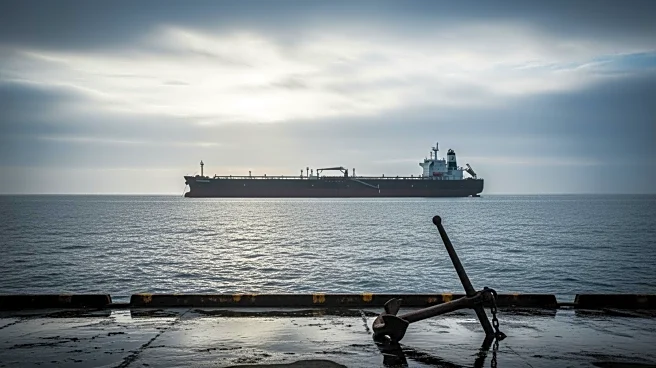
The United States has seized the oil tanker Skipper off the coast of Venezuela, marking a significant escalation in tensions between Washington and Caracas. The Skipper, which was carrying Venezuelan crude
oil, is the first tanker to be interdicted under U.S. sanctions imposed on Venezuela since 2019. The seizure is part of a broader U.S. strategy to intercept more ships transporting Venezuelan oil, aiming to increase pressure on Venezuelan President Nicolás Maduro. The Skipper had been involved in ship-to-ship transfers of Venezuelan crude oil to other vessels, including the Panama-flagged Neptune 6, owned by a Chinese company. This move by the U.S. is seen as an effort to disrupt a network of tankers, often referred to as the 'dark fleet,' that transport sanctioned oil from countries like Venezuela, Iran, and Russia.
Why It's Important?
The seizure of the Skipper highlights the ongoing geopolitical tensions between the U.S. and Venezuela, as well as the broader implications for global oil markets. By targeting Venezuelan oil exports, the U.S. aims to cut off a crucial revenue stream for the Maduro government, which has been under economic pressure due to international sanctions. This action could lead to increased volatility in oil prices, as it disrupts the supply chain of Venezuelan crude, which is heavily discounted to compete with other sanctioned oil from Russia and Iran. The move also underscores the U.S.'s commitment to enforcing sanctions and could lead to further diplomatic strains with countries involved in the transport and purchase of Venezuelan oil.
What's Next?
Further interventions by the U.S. are expected, with plans to target additional tankers involved in transporting Venezuelan oil. The U.S. Justice Department and Homeland Security have been preparing for these seizures for months, indicating a sustained effort to clamp down on the 'dark fleet.' This could lead to increased diplomatic tensions with countries like China, which is a major buyer of Venezuelan oil. The situation may also prompt Venezuela to seek alternative routes and methods to export its oil, potentially involving more clandestine operations to evade U.S. sanctions.
Beyond the Headlines
The use of the 'dark fleet' to transport sanctioned oil raises significant ethical and legal questions about international trade and the enforcement of sanctions. These tankers often operate under opaque ownership structures and without top-tier insurance, posing risks to maritime safety and environmental standards. The global shadow fleet, which includes over 1,400 tankers, highlights the challenges in regulating international shipping and the complexities of enforcing sanctions in a globalized economy.