



What's Happening?
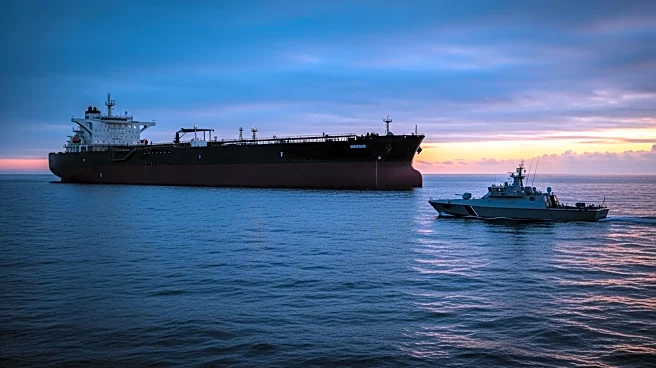
U.S. forces have intercepted an oil tanker off the coast of Venezuela, marking the second such incident in less than two weeks. This action is part of President Trump's intensified efforts to pressure Venezuelan President Nicolás Maduro. The operation,
confirmed by Homeland Security Secretary Kristi Noem, involved the U.S. Coast Guard and the Defense Department. The tanker, identified as Centuries and flying under the Panamanian flag, was stopped voluntarily and boarded by U.S. personnel. This move follows President Trump's announcement of a blockade on sanctioned oil tankers associated with Venezuela. The Venezuelan government has condemned the U.S. actions as 'criminal' and plans to pursue legal action through the United Nations Security Council.
Why It's Important?
The interception of the oil tanker is a significant escalation in the U.S.'s ongoing pressure campaign against the Maduro regime. This action underscores the U.S. government's commitment to curbing what it describes as the illicit movement of oil that funds narcoterrorism in the region. The blockade and subsequent seizures are part of a broader strategy to destabilize Maduro's government, which the U.S. accuses of drug trafficking and other illegal activities. The situation has implications for international relations, particularly between the U.S. and countries that continue to engage with Venezuela despite American sanctions. The U.S. oil industry, which has historical ties to Venezuela, also stands to be affected by these geopolitical tensions.
What's Next?
The U.S. is likely to continue its aggressive stance against Venezuela, with further interceptions of oil tankers expected. The Venezuelan government may seek international support to counter U.S. actions, potentially escalating the situation in international forums like the United Nations. The U.S. administration's focus on Venezuela is part of a larger strategy to combat drug trafficking, which may lead to increased military presence and operations in the Caribbean and beyond. The international community will be watching closely to see how these developments affect global oil markets and diplomatic relations.
Beyond the Headlines
The U.S.'s actions raise questions about the legality and ethics of using military force to enforce economic sanctions. Critics argue that such measures could be seen as acts of aggression, potentially violating international law. The situation also highlights the complex interplay between economic interests and foreign policy, as the U.S. seeks to reclaim assets and influence in Venezuela's oil sector. The broader implications for U.S.-Latin America relations are significant, as other countries in the region may view these actions as a precedent for future U.S. interventions.