
What's Happening?
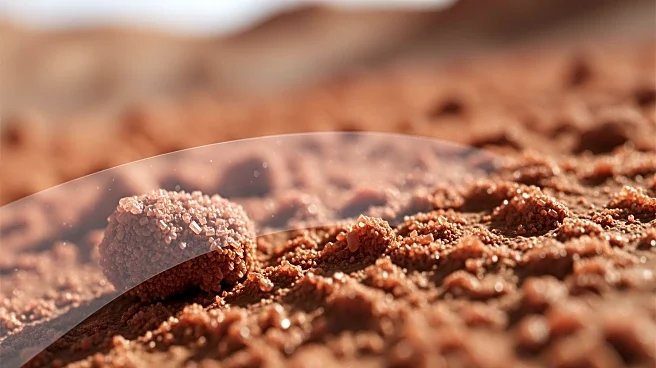
A study led by Penn State Altoona Professor of Microbiology Corien Bakermans has explored the interaction between tardigrades, microscopic animals known for their resilience, and simulated Martian regolith. The research found that tardigrade activity
was significantly reduced when exposed to the MGS-1 simulant, a type of Martian soil mimic. This reduction in activity suggests that the regolith may contain elements that inhibit biological activity. However, washing the regolith with water before introducing the tardigrades mitigated these effects, indicating that harmful components could be removed. The findings, published in the International Journal of Astrobiology, contribute to understanding how extraterrestrial environments might impact life and how these environments could be used to protect against Earthly contaminants.
Why It's Important?
The study's findings have significant implications for planetary protection and space exploration. Understanding how Martian soil affects biological organisms is crucial for future missions that aim to establish human presence on Mars. The ability of Martian regolith to inhibit microbial activity could serve as a natural defense against Earthly contaminants, aligning with planetary protection goals. However, this also poses challenges for using Martian soil to support human life, such as growing food. The research highlights the need to balance the protective benefits of Martian soil with its potential drawbacks, such as its impact on human health and agriculture.
What's Next?
Future research will focus on identifying the specific components in the Martian regolith that inhibit biological activity and exploring additional environmental factors like atmospheric pressure and temperature. These studies aim to build a comprehensive understanding of how Martian soil can be adapted for human use while maintaining planetary protection. The findings could inform the development of strategies to mitigate the harmful effects of Martian soil, potentially involving the use of water or other methods to neutralize its inhibitory properties.
Beyond the Headlines
The research opens up discussions on the ethical and practical considerations of using extraterrestrial resources. The potential for Martian soil to act as a barrier against Earthly contaminants raises questions about the long-term sustainability of human activities on Mars. Additionally, the study underscores the importance of international cooperation in space exploration, as planetary protection is a global concern regulated by multiple space agencies, including NASA.