



What's Happening?
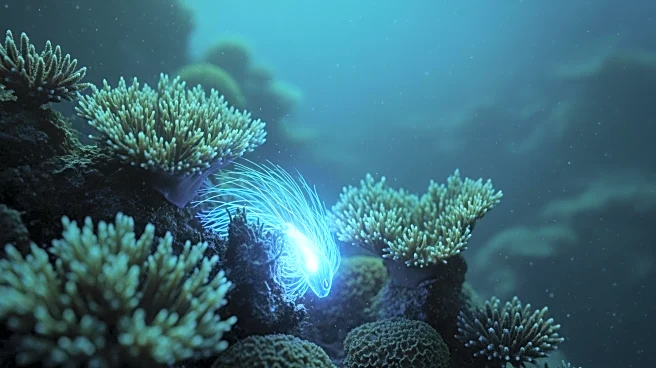
Scientists from the California Academy of Sciences have conducted deep-sea dives off the coast of Guam, exploring the ocean's 'twilight zone' and discovering new marine species. The expedition, which involved retrieving monitoring devices from deep reefs,
revealed a variety of previously unseen creatures, including new species of crabs and sea slugs. However, the researchers also found significant amounts of human-produced trash, highlighting the impact of pollution even in these remote areas. The study suggests that climate change is affecting these deep waters, with temperature data indicating warming trends similar to those observed at shallower depths.
Why It's Important?
The discovery of new species in the twilight zone underscores the rich biodiversity of deep-sea ecosystems and the importance of preserving these habitats. However, the presence of pollution and the effects of climate change pose significant threats to these environments. The findings highlight the need for increased efforts to protect marine ecosystems from human activities and to address the broader impacts of climate change. Understanding the dynamics of these deep-sea habitats is crucial for developing effective conservation strategies and mitigating the effects of environmental changes.
What's Next?
The expedition marks the beginning of a two-year project to collect data from deep reefs across the Pacific, aiming to gain a comprehensive understanding of life in the twilight zone. The research will inform conservation efforts and help identify measures to protect these vulnerable ecosystems. As scientists continue to analyze the collected data, they hope to raise awareness about the importance of preserving deep-sea environments and the urgent need to address pollution and climate change.