




What's Happening?
Ukraine’s Minister of Agrarian Policy and Food, Taras Vysotskyi, and First Deputy Denys Bashlyk held an online meeting with European Commissioner for Agriculture and Food Christophe Hansen to discuss critical issues surrounding agricultural export logistics
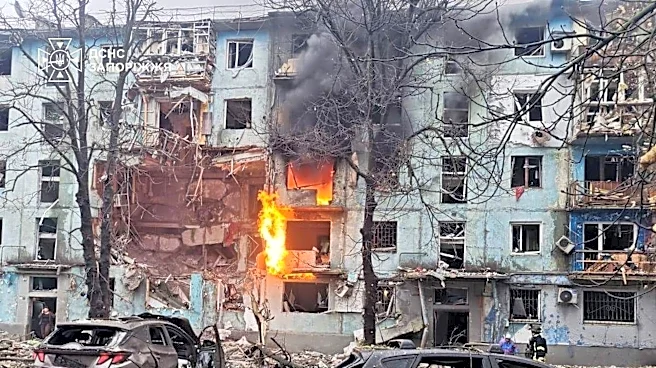
and support for Ukrainian farmers. The primary focus was on overcoming the severe limitations imposed by the Black Sea blockade and Russian strikes on transport infrastructure. These disruptions mean that alternative export routes can only handle about half of the required export volumes, and their capacity is nearly exhausted. The Ministry of Agrarian Policy highlighted that simplifying cross-border transport procedures could enable an additional 1 million tonnes of agricultural products to be exported per season. Vysotskyi emphasized the joint task with EU partners to find solutions for increasing exports and reducing logistics costs. Discussions also covered the stability of Ukrainian grain supplies to importers, potential compensation for additional logistics costs, improving the administration of specific product exports, and planning a high-level agricultural discussion at the Ukraine Recovery Conference URC 2027. Additionally, the financial plight of Ukrainian farmers, facing high costs for fuel, production, and transportation, was reviewed, with concerns that some land might remain unsown in the spring if the situation does not improve. International assistance for temporary crop storage, including grain bags, was also discussed.
Why It's Important?
The ongoing discussions between Ukraine and the EU regarding agricultural exports are crucial for both Ukraine's economic stability and global food security. Ukraine is a major global supplier of agricultural products, and the disruption of its export capabilities due to conflict has far-reaching consequences. The current limitations on export volumes, stemming from infrastructure damage and blockades, not only deprive Ukraine of vital revenue but also contribute to volatility in international food markets. Finding effective solutions to increase export capacity and reduce logistics costs is essential for sustaining Ukraine's agricultural sector, which is a cornerstone of its economy. The financial challenges faced by Ukrainian farmers, including high operational costs and potential unsown land, threaten future harvests and could exacerbate food supply issues. EU support, both in terms of logistical solutions and financial aid, is critical to prevent a deeper crisis in Ukraine's agricultural sector and to ensure a more stable global food supply. The simplification of cross-border procedures and potential compensation for logistics costs could provide much-needed relief and incentivize continued agricultural production.
What's Next?
Following the discussions, Ukraine and the EU are expected to continue working on concrete measures to simplify cross-border transport procedures and enhance the capacity of alternative export routes. This may involve further coordination on infrastructure development, customs streamlining, and logistical support. The proposal to resume regular Ukraine–EU agricultural dialogue in January 2027 indicates a commitment to ongoing collaboration, with priority issues likely including aligning Ukrainian legislation with European standards, preparing for integration into the Common Agricultural Policy, market access, and direct support for farmers. The financial situation of farmers will remain a critical concern, potentially leading to further international assistance programs for working capital and temporary storage solutions. The outcomes of these efforts will be closely watched as they will determine Ukraine's ability to maintain its agricultural output and export capacity, which is vital for its economic recovery and for mitigating global food supply chain disruptions. The Ukraine Recovery Conference URC 2027 will likely serve as a platform for further high-level commitments and strategic planning in this area.
Beyond the Headlines
The challenges in Ukrainian agricultural exports highlight the intricate link between geopolitical conflict, economic stability, and global food security. Beyond the immediate logistical and financial concerns, the situation underscores the vulnerability of global food systems to regional conflicts. The reliance on alternative routes and the need for international cooperation to maintain food flows reveal the interconnectedness of national economies and the broader humanitarian implications of war. The discussions also touch upon Ukraine's long-term integration into European economic structures, particularly the Common Agricultural Policy, which could fundamentally reshape its agricultural sector and its role in the European food supply chain. The resilience of Ukrainian farmers, despite immense challenges, also points to the enduring human element in maintaining essential services during conflict. The ongoing efforts to support Ukraine's agricultural sector are not just about economic recovery but also about preserving a vital part of its national identity and ensuring its future as a key player in global food production.