
What's Happening?
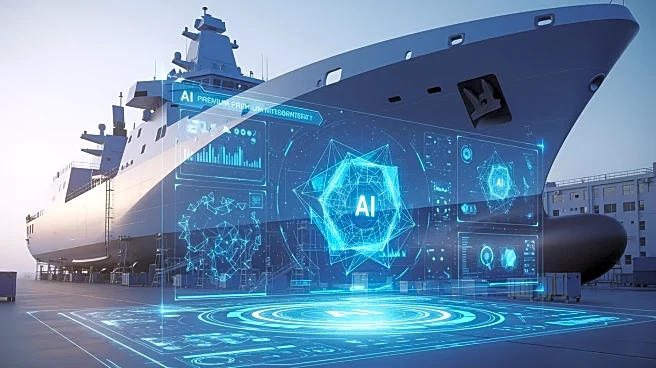
The U.S. Navy is investing $448 million in artificial intelligence and autonomous systems to modernize its fleet and improve shipbuilding efficiency. This initiative, known as 'Ship OS', utilizes Palantir's
AI software to streamline production, reduce costs, and enhance the Navy's ability to build ships more quickly and efficiently. The investment aims to address longstanding issues with shipbuilding delays by advancing AI and autonomy in ship design, construction, and operational support. Navy Secretary John Phelan emphasized that this investment will provide the necessary resources for shipbuilders, shipyards, and suppliers to modernize operations and meet national defense requirements. The program has already shown significant results, such as reducing production days and improving quality, according to Palantir's head of defense, Mike Gallagher.
Why It's Important?
This investment is crucial as it represents a significant step towards modernizing the U.S. Navy's fleet amidst growing global maritime competition, particularly with China, which has rapidly modernized its fleet. By leveraging AI and autonomous systems, the Navy aims to enhance its operational capabilities and maintain its dominance at sea. The initiative aligns with broader efforts to incorporate advanced technologies into all stages of shipbuilding, from design to deployment. This move is also part of President Trump's push to support American AI initiatives, highlighting the strategic importance of AI in national defense. The successful implementation of this program could lead to more efficient use of taxpayer dollars and ensure the U.S. maintains its competitive edge in maritime defense.
What's Next?
The Navy plans to continue integrating AI and autonomous systems into its shipbuilding processes, with the goal of further reducing construction timelines and costs. The initiative will aggregate data from various sources to identify bottlenecks and streamline workflows, supporting proactive risk mitigation. As the program progresses, it is expected to provide a unified, data-driven approach to production management, enabling faster and more informed decision-making. The Navy's efforts to modernize its fleet will likely continue to evolve, with potential expansions in AI applications across other areas of military operations.