




What's Happening?
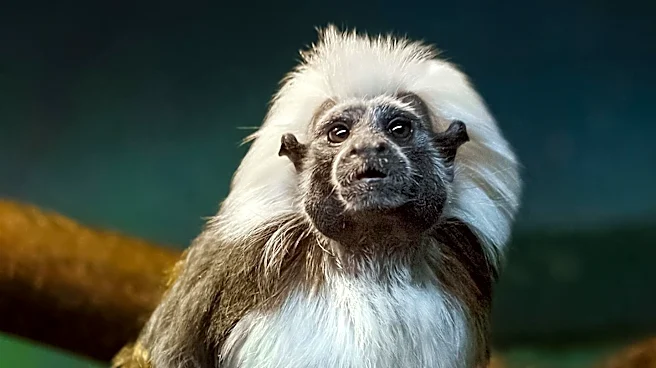
Northern Illinois University (NIU) anthropologist Leila Porter has been awarded a $123,000 grant from the National Science Foundation (NSF) to support her research on wild saddleback tamarin monkeys in the Bolivian rainforests. The project, which launched
this summer, aims to understand how these monkeys meet their nutritional needs for survival and reproduction. Porter's research integrates primatology, nutritional ecology, and microbiome science, making it one of the first studies to examine all three aspects in a wild primate with a diet rich in tree gums and insects. The research team, including NIU's Mitchell Irwin and Washington University's Liz Mallott, will monitor tamarin diets, map food availability, and analyze nutritional content and gut microbial changes over time.
Why It's Important?
This NSF grant is crucial for advancing our understanding of primate nutritional strategies and the role of gut microbiomes in adapting to challenging diets. The study's interdisciplinary approach could provide significant insights into how saddleback tamarins extract nutrients from difficult-to-digest foods like chitin-rich insects and complex carbohydrates from tree gums. This knowledge has broader implications for conservation efforts, especially in the face of changing tropical environments. Furthermore, the research into cooperative breeding among tamarins, where group members share infant care, could shed light on similar evolutionary strategies in humans. The project also contributes to capacity building by training an all-Bolivian field team and supporting local botanists and entomologists, fostering scientific expertise in the region.
What's Next?
Porter's Bolivian research team will continue to monitor tamarin groups, collect food and fecal samples, and map food availability. Mitchell Irwin at NIU will analyze the nutritional content of the monkeys' diet, while Liz Mallott at Washington University will examine fecal samples to understand shifts in gut microbial communities. The team hopes to secure additional funding to extend data collection through an entire annual cycle (July 2026 – June 2027) to capture seasonal changes in food availability and observe infant care during peak birth seasons. This extended research period would provide a more comprehensive understanding of the tamarins' long-term nutritional and reproductive strategies. The findings are expected to contribute to primatology, nutritional ecology, and microbiome science, with potential applications in conservation and evolutionary biology.
Beyond the Headlines
The study's focus on the gut microbiome highlights a rapidly growing area of scientific inquiry, demonstrating its critical role in animal health, digestion, and adaptation. Understanding how specific gut microbes enable tamarins to thrive on challenging diets could inspire novel approaches in human nutrition or even biotechnology. The research also subtly touches upon the broader theme of biodiversity and ecosystem health, as the survival of these primates is intrinsically linked to the health of their rainforest habitat. The project's commitment to training local scientists and strengthening museum collections underscores the importance of international collaboration and local empowerment in scientific research, ensuring that the benefits of such studies extend beyond academic publications to tangible community development and conservation efforts.