





What's Happening?
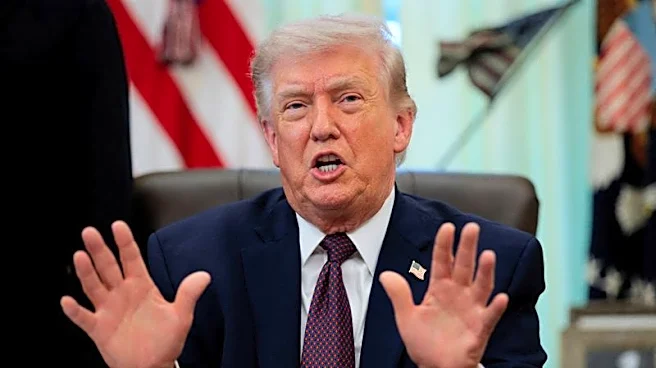
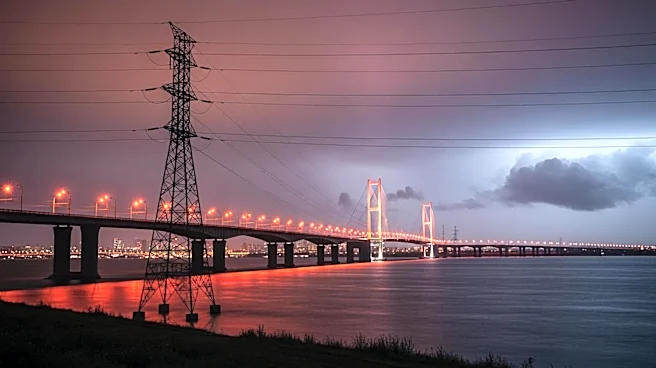
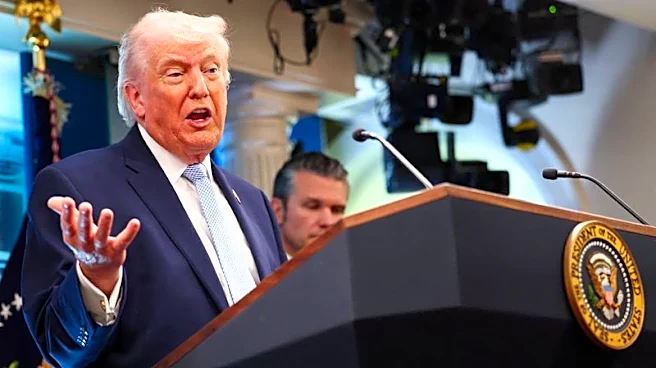
President Trump has issued a stark warning to Iran, threatening to target civilian infrastructure such as bridges and power plants if Iran does not comply with U.S. demands to reopen the Strait of Hormuz. This threat comes amid ongoing negotiations and a temporary
ceasefire agreement. Trump's rhetoric has drawn criticism from international leaders and legal experts, who argue that such actions would constitute war crimes under international law. The president's statements have raised concerns about the legality and ethical implications of targeting civilian infrastructure, which is generally protected under the laws of war unless used for military purposes.
Why It's Important?
The president's threats to Iran's infrastructure highlight the potential for escalation in the region, with significant implications for international relations and global stability. Targeting civilian infrastructure could lead to widespread humanitarian consequences and further destabilize the region, affecting millions of civilians. The situation underscores the tension between military strategy and adherence to international law, with potential repercussions for U.S. foreign policy and its standing in the international community. The threats also raise questions about the role of military personnel in executing orders that may conflict with legal and ethical standards.
What's Next?
The international community is likely to continue monitoring the situation closely, with potential diplomatic efforts to de-escalate tensions and prevent further conflict. Legal experts and human rights organizations may seek to hold the administration accountable for any actions that violate international law. The U.S. military may face challenges in navigating orders that conflict with established legal norms, potentially leading to internal debates about the legality of such actions. The situation remains fluid, with potential for further developments as negotiations continue.