







What's Happening?
Latin America is highly susceptible to natural disasters, including atmospheric events like hurricanes, droughts, and floods, as well as non-atmospheric events such as earthquakes and volcanic eruptions. Despite this high exposure, the region suffers
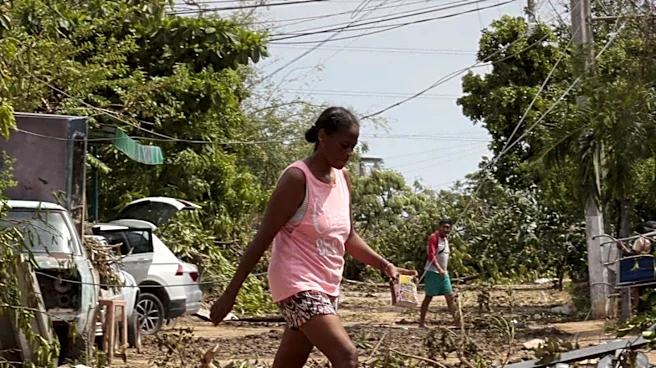
from low insurance coverage and limited economic capacity for governmental response. Manuel Aguilera, general manager of Mapfre Economics, highlights the vulnerability of low-income populations and assets concentrated in large cities or tourist areas. When these extreme phenomena strike, they cause significant material and economic damage, often leaving communities economically depressed and requiring years for recovery. The traditional response relies on public funds or external aid, frequently overlooking the role of insurance. Mapfre Economics estimates an 'Insurance Protection Gap' of $316 billion, indicating that the optimal level of insurance coverage should be about 2.5 times the current amount.
Why It's Important?
The limited insurance penetration in Latin America has profound implications for economic stability and recovery in the face of increasing natural disaster frequency and intensity. The reliance on public funds for disaster relief often leads to increased national debt or additional fiscal burdens, diverting resources from other critical development areas. This situation disproportionately affects low-income groups, exacerbating existing inequalities and hindering long-term economic growth. The lack of robust insurance mechanisms means that individuals, businesses, and governments are ill-prepared to absorb the financial shocks of disasters, leading to prolonged recovery periods and persistent economic vulnerability. The comparison between Hurricane Wilma in Cancún (2005), where high insurance coverage facilitated rapid recovery, and Hurricanes Ingrid and Manuel in Acapulco (2013), which caused prolonged economic impact due to limited insurance, underscores the critical role of insurance in disaster resilience.
What's Next?
Addressing Latin America's insurance gap will require innovative solutions, potentially involving public-private partnerships. Manuel Aguilera suggests that while insurance is necessary, it is not sufficient on its own, advocating for models where governments and private companies collaborate to create more effective protection mechanisms. One proposed solution is the establishment of large, proactive funds during periods of normalcy, similar to Spain's Insurance Compensation Consortium, which uses a small surcharge on insurance policies to fund disaster compensation. Such a solidarity mechanism could ensure that the economic cost of catastrophic events is covered, even if it exceeds the capacity of private companies. The implementation of such models faces institutional barriers but is crucial for distributing the economic impact of natural disasters more sustainably and fostering long-term resilience in the region.
Beyond the Headlines
The challenge of natural disasters in Latin America extends beyond immediate economic losses, touching upon deeper issues of social equity and governance. The vulnerability of low-income populations highlights systemic inequalities, as these groups often lack the resources to rebuild and are more exposed to environmental risks. The institutional barriers to implementing effective insurance and disaster preparedness strategies point to broader governance challenges, including political will, regulatory frameworks, and public trust. A long-term vision is required to shift from reactive disaster response to proactive risk management, which includes not only financial instruments but also urban planning, infrastructure development, and community-based resilience programs. The increasing frequency of extreme weather events due to climate change further amplifies the urgency of these issues, demanding comprehensive and integrated approaches to protect lives, livelihoods, and development gains in the region.