
What's Happening?
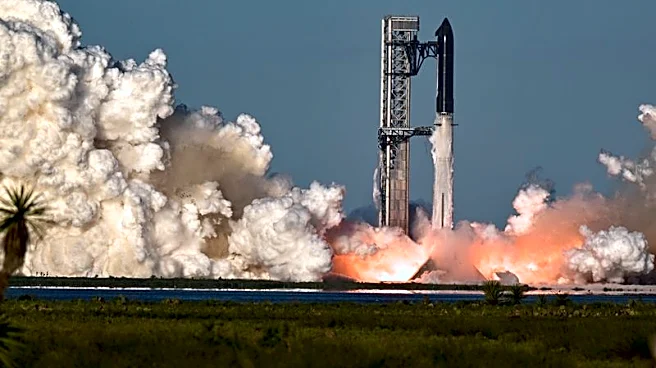
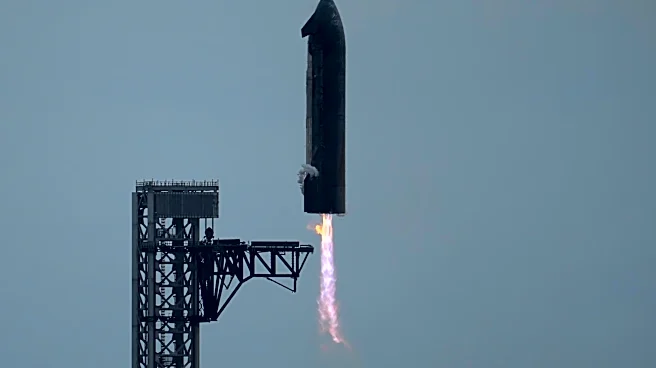
SpaceX successfully recovered the upper stage of its Starship megarocket for the first time on November 14, 2026, using the 'chopstick' arms of its Texas launch tower. This achievement marks a significant
step towards the company's goal of full and rapid rocket reuse. The Ship, which returns from orbit at high speeds, had not previously attempted this maneuver. While the upper stage recovery was successful, the lower-stage Super Heavy booster experienced a low-fuel alarm and diverted to a splashdown in the Gulf of Mexico, rather than being caught. SpaceX founder Elon Musk has already announced plans for an even larger Starship, the V4 model, which will be approximately 40% longer, increasing its propellant load by over 60%. The V4 will also feature nine higher-thrust Raptor V4 engines, an increase from the current V3's six engines. The current V3 Starship, when fully stacked with its Super Heavy first stage, stands at 408 feet (124 m) tall, making it the largest and most powerful rocket ever built.
Why It's Important?
This successful Starship upper stage catch is a critical milestone for SpaceX, bringing its vision of fully reusable rockets closer to reality. Full reusability is expected to dramatically reduce the cost of space launches, making space travel and operations more accessible and frequent. This could accelerate advancements in satellite deployment, space tourism, and deep-space exploration, including potential missions to the Moon and Mars. The development of a larger V4 Starship indicates SpaceX's ambition to increase payload capacity and mission versatility, further solidifying its leadership in the commercial space industry. This technological leap could also spur innovation among competitors and potentially reshape the global space economy, impacting industries reliant on satellite technology, such as telecommunications, navigation, and Earth observation. The ability to rapidly and cost-effectively launch larger payloads could also have strategic implications for national security and scientific research.
What's Next?
SpaceX plans to continue refining its Starship recovery methods, with the ultimate goal of achieving a 'double chopsticks catch' for both the Super Heavy booster and the Starship upper stage. The V4 Starship model is anticipated to debut in 2027, with ongoing design adjustments as development progresses. These advancements are expected to enable more ambitious missions, including the deployment of larger batches of Starlink internet satellites and future crewed missions. The increased size and power of the V4 Starship suggest a focus on expanding capabilities for lunar and Martian missions, aligning with Elon Musk's long-term vision for human space exploration. The success of these future tests and deployments will be closely watched by the aerospace industry, investors, and government agencies, as they will dictate the pace of future space endeavors and the commercial viability of large-scale space operations.
Beyond the Headlines
The successful recovery of the Starship upper stage represents a paradigm shift in rocket technology, moving beyond the traditional expendable rocket model. This achievement not only reduces operational costs but also minimizes space debris, contributing to a more sustainable approach to space exploration. The continuous pursuit of larger and more powerful rockets, as evidenced by the planned V4 Starship, reflects a broader trend towards expanding humanity's presence beyond Earth. This technological drive raises ethical considerations regarding space resource utilization, planetary protection, and the long-term implications of human expansion into the solar system. The increased accessibility to space could also democratize space research and development, allowing a wider range of nations and private entities to participate in space activities, potentially leading to new scientific discoveries and technological breakthroughs.