What's Happening?
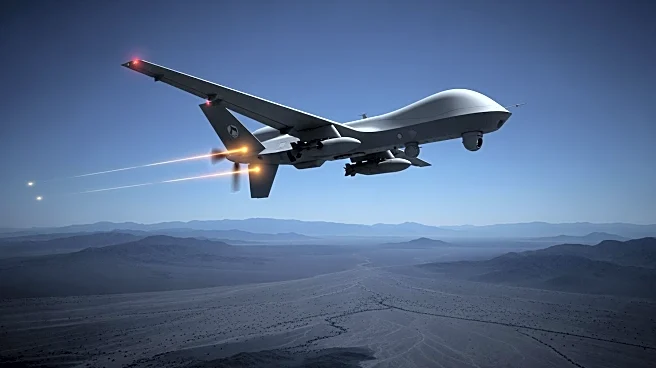
Separatists in southern Yemen, represented by the Southern Transitional Council (STC), have accused Saudi Arabia of launching airstrikes against their forces in the Hadramout governorate. This accusation follows Saudi Arabia's warning to the STC to withdraw
from recently occupied governorates. The STC, backed by the United Arab Emirates, claims that the airstrikes occurred after their forces faced ambushes, resulting in casualties. The situation exacerbates existing tensions in Yemen, where a Saudi-led coalition has been engaged in a prolonged conflict against Houthi rebels. The STC's actions, including their recent control over Hadramout and Mahra, have strained relations between Saudi Arabia and the UAE, despite their shared interests in the region.
Why It's Important?
The accusations of airstrikes by Saudi Arabia against the STC highlight the fragile nature of alliances in the Middle East, particularly in Yemen. The conflict in Yemen has significant implications for regional stability and international relations, especially given the involvement of major powers like Saudi Arabia and the UAE. The STC's push for control in southern Yemen and their calls for secession could lead to further fragmentation of the country, complicating peace efforts. The situation also underscores the geopolitical rivalry between Saudi Arabia and the UAE, as both nations vie for influence in Yemen and the broader region.
What's Next?
The ongoing tensions between the STC and Saudi Arabia could lead to further military confrontations if diplomatic solutions are not pursued. The international community, including the United Nations, may need to intervene to mediate between the conflicting parties to prevent further escalation. Additionally, the strained relations between Saudi Arabia and the UAE could impact their cooperation in other regional matters, potentially affecting OPEC dynamics and broader Middle Eastern geopolitics.