







What's Happening?
Millets are emerging as the 'superfood of the century' due to their rich nutritional profile and adaptability to diverse growing conditions. They are seen as a sustainable solution for global food security, health, and environmental sustainability. Different
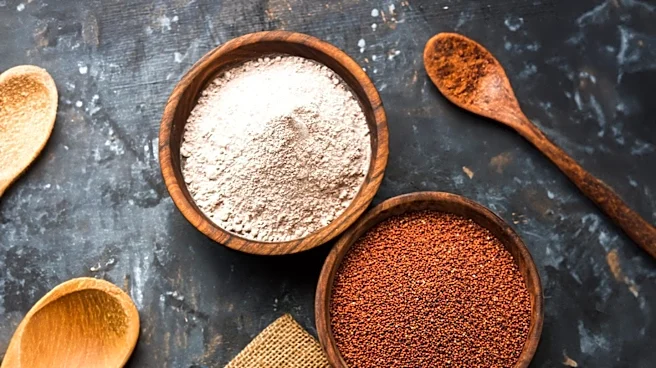
millet types, including pearl millet, finger millet, and foxtail millet, exhibit varied nutritional compositions. For instance, some finger millet varieties are rich in calcium and iron, crucial for combating micronutrient deficiencies, while pearl millet is noted for its high protein content, and foxtail millet for its dietary fiber and B vitamins. Studies suggest that substituting polished white rice with millets in traditional dishes enhances nutritional value, offering more fiber, protein, and micronutrients. Regular consumption of millet can lead to better glycemic control, reduced blood pressure, and lower cholesterol levels, promoting satiety and aiding weight management. However, challenges remain, such as ensuring adequate iodine intake to prevent goiter, improving consumer acceptance through education, and maximizing nutritional potential through selective breeding.
Why It's Important?
The rise of millets as a superfood holds significant implications for public health and agricultural sustainability in the U.S. Their nutritional density offers a powerful tool against malnutrition and non-communicable diseases like diabetes and heart conditions, which are prevalent health concerns. By promoting satiety and aiding in weight management, millets can contribute to addressing the obesity epidemic. From an agricultural perspective, millets' adaptability to various growing conditions makes them a resilient crop, potentially enhancing food security and offering sustainable farming alternatives, especially in regions facing climate challenges. Integrating millets into the American diet could diversify food sources, reduce reliance on staple crops like rice and wheat, and support more sustainable food systems. Overcoming hurdles like consumer acceptance and potential goitrogenic effects in certain varieties will be crucial for their widespread adoption and impact.
What's Next?
For millets to fully realize their potential in the U.S., continued research and strategic promotion are essential. Future efforts will likely focus on identifying bioactive compounds in millets that confer health benefits and developing functional food products that integrate easily into modern diets. Public health campaigns will need to educate consumers about the nutritional advantages and culinary versatility of millets to improve acceptance. Agricultural research will continue to focus on breeding nutrient-dense varieties and optimizing organic nutrient management practices to enhance soil fertility and crop yields. Policymakers may consider including millets in dietary guidelines to encourage their consumption. Addressing concerns about iodine intake and goitrogenic effects through further studies and dietary recommendations will also be critical for widespread adoption.
Beyond the Headlines
Beyond their immediate health and agricultural benefits, the emergence of millets as a 'superfood of the century' signifies a broader shift in global food systems towards more sustainable and resilient options. This trend reflects a growing awareness of the environmental impact of food production and the need for crops that can thrive in changing climates. The emphasis on millets also highlights the importance of dietary diversity and the potential of traditional grains to address modern nutritional challenges. Culturally, integrating millets into Western diets could introduce new culinary traditions and flavors, enriching the food landscape. Furthermore, the challenges in consumer acceptance underscore the need for effective communication strategies to bridge the gap between scientific understanding of nutritional benefits and everyday dietary choices, promoting a more informed and sustainable approach to eating.