


What's Happening?
Speculation regarding the nature of White House aide Natalie Harp's relationship with President Trump has intensified following remarks by Senator Jon Ossoff and the publication of two letters allegedly written by Harp to President Trump in 2023. These
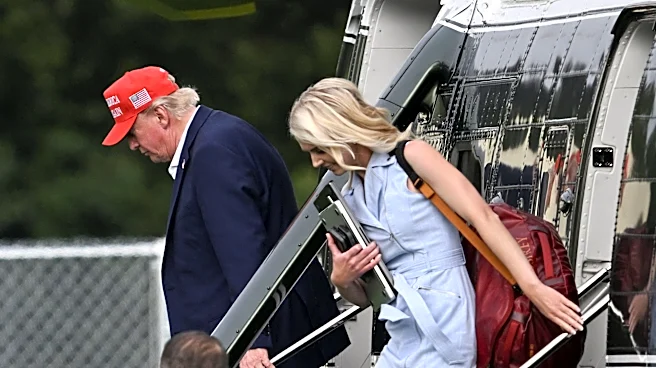
letters, obtained by journalist Michael Wolff, express deep devotion and a desire to 'always be right between us,' with one apology for 'losing focus' and stating, 'You are all that matters to me.' Harp, who began working for President Trump in 2022 after a stint at One America News Network, is known for her close proximity to the President, often handling his Truth Social posts and providing him with hard copies of news articles. Reports indicate she worked without a security clearance for a year, and President Trump has reportedly referred to her as someone who 'loves him as much as his wife and children.' The letters, written when Harp was 31 and President Trump was 76, have fueled public discussion, though no romantic connection has been confirmed by independent media outlets.
Why It's Important?
The ongoing speculation surrounding Natalie Harp's relationship with President Trump carries significant implications for the political landscape and public perception of the White House. The alleged letters and Harp's reported access to sensitive information, despite initially lacking a security clearance, raise questions about White House protocols and the potential for undue influence. The strong reactions from President Trump's allies, including White House Communications Director Steven Cheung and spokesman Davis Ingle, who issued aggressive statements against Senator Ossoff and a CNN journalist, highlight the sensitivity of the issue within President Trump's circle. This situation could impact public trust in the administration, particularly concerning the conduct of high-ranking officials and the management of information. Furthermore, the controversy could be leveraged by political opponents, as demonstrated by Senator Ossoff's continued focus on the matter, potentially influencing future political campaigns and narratives.
What's Next?
The immediate future will likely see continued scrutiny of Natalie Harp's role and relationship with President Trump. Media outlets may pursue further investigations into the authenticity of the letters and the specifics of Harp's responsibilities and access within the White House. Political figures, particularly those in opposition, may continue to reference the situation to question the administration's conduct and transparency. The White House is expected to maintain its stance of denying any inappropriate relationship, potentially issuing further statements or attempting to redirect public attention. The controversy could also prompt internal reviews or adjustments to White House staffing protocols, especially concerning security clearances and access to the President. As Senator Ossoff is running for reelection and is speculated to have presidential ambitions for 2028, this issue may remain a recurring theme in political discourse.
Beyond the Headlines
Beyond the immediate political implications, this situation touches upon deeper themes of power dynamics, gender roles in politics, and the nature of loyalty within high-stakes environments. The alleged letters, if authentic, offer a glimpse into the intense personal devotion some individuals exhibit towards powerful figures, raising questions about the boundaries between professional duty and personal allegiance. The White House's strong defensive reaction, framing criticism as sexist, also highlights the complex interplay of gender and political attacks. This incident could contribute to a broader conversation about the ethical considerations of staff relationships in political offices and the potential for personal dynamics to influence governance. It also underscores the enduring public fascination with the private lives of political leaders and the challenges of maintaining privacy in an era of constant media scrutiny.