



What's Happening?
China, the world's largest emitter of carbon dioxide, may be on the verge of a significant turning point in its emissions trajectory. According to an analysis by Lauri Myllyvirta at the Centre for Research on Energy and Clean Air, China's greenhouse gas
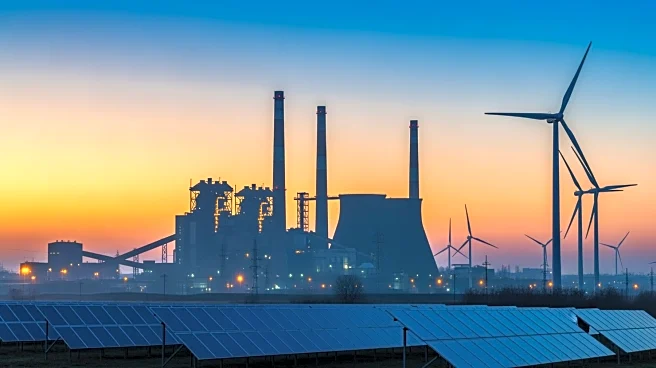
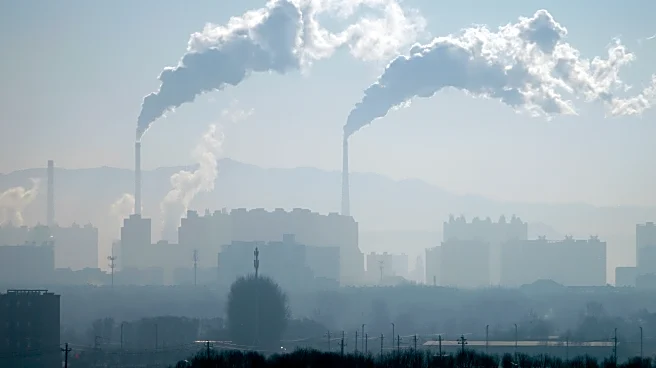
emissions have been flat or slightly declining since March 2024. This potential decline is largely attributed to the rapid growth of solar and wind power generation, which has offset increased fossil fuel demand in other sectors. In the first half of 2025, China added solar power capacity equivalent to 100 solar panels per second, totaling 240 gigawatts in the first nine months. Despite this progress, emissions from the chemical industry have increased due to higher coal and oil consumption. The trade tariffs imposed by President Trump have not significantly impacted China's emissions, as the effects of the trade war have largely canceled each other out.
Why It's Important?
The potential decline in China's emissions is crucial for global efforts to combat climate change. As the largest emitter, China's actions significantly influence global carbon dioxide levels. A confirmed decline in emissions could signal a broader global trend towards reduced fossil fuel use, aligning with the goals of the Paris Agreement. However, experts caution against premature declarations of a peak, as consistent data over the next few years is needed to confirm this trend. The outcome of China's emissions trajectory will impact the ability of developed and developing nations to meet climate targets while balancing economic growth. If China's emissions begin to fall, it could encourage other countries to accelerate their own emissions reduction efforts, potentially leading to a global shift towards low-carbon energy sources.
What's Next?
While there is optimism about China's potential emissions decline, experts like David Fishman from the Lantau Group suggest that emissions may remain flat until 2030, with no significant decline until after that year. This is due to the current per capita energy use in China, which has not yet reached the levels of high-income nations. The next few years will be critical in determining whether China's emissions have indeed peaked and if the country can sustain a downward trend. The global community will be closely monitoring China's energy policies and their impact on emissions, as these developments will have significant implications for international climate agreements and efforts to mitigate climate change.
Beyond the Headlines
The potential decline in China's emissions highlights the importance of renewable energy investments and technological advancements in reducing carbon footprints. China's rapid deployment of solar power demonstrates the feasibility of large-scale renewable energy adoption, which could serve as a model for other countries. Additionally, the situation underscores the complex interplay between economic policies, such as trade tariffs, and environmental outcomes. As countries navigate these challenges, the need for coordinated international efforts to address climate change becomes increasingly apparent. The long-term success of global climate initiatives will depend on the ability of nations to balance economic growth with sustainable environmental practices.