




What's Happening?
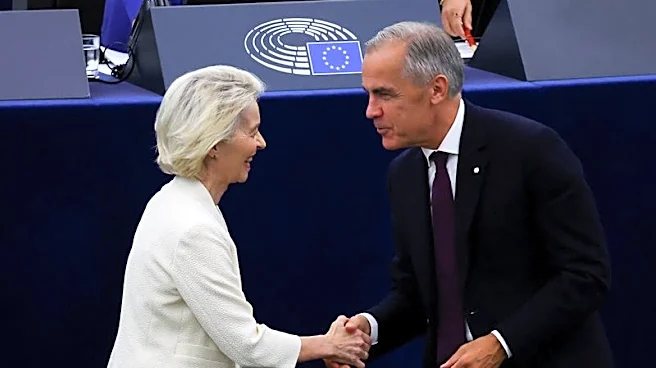
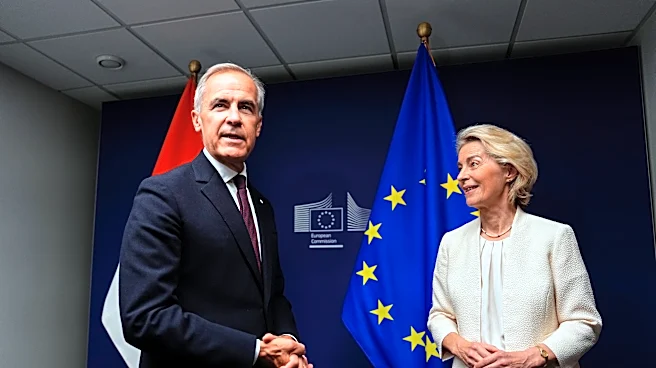
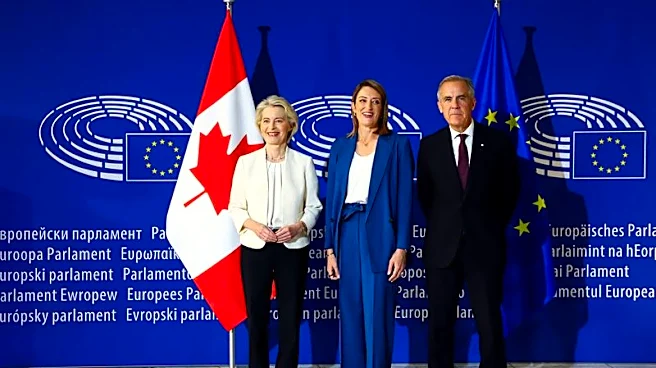
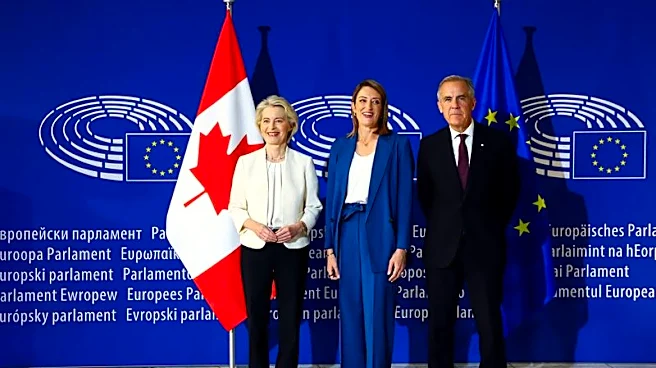
President Trump has threatened to impose significant tariffs on Europe if the European Union proceeds with a proposed 'associate membership' for Canada. This warning comes after European Commission President Ursula von der Leyen suggested the idea, aiming
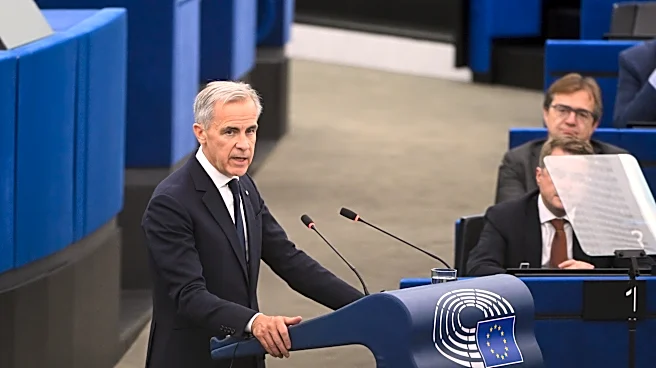
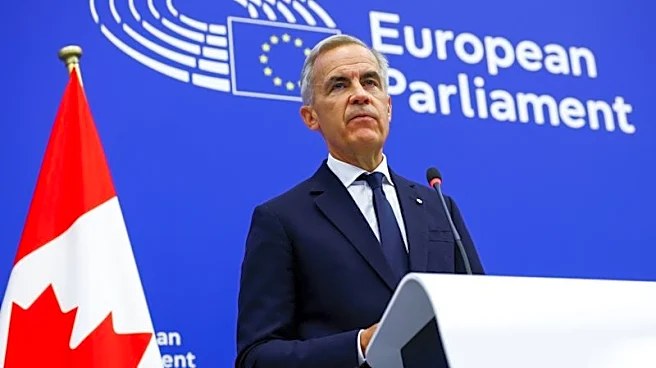
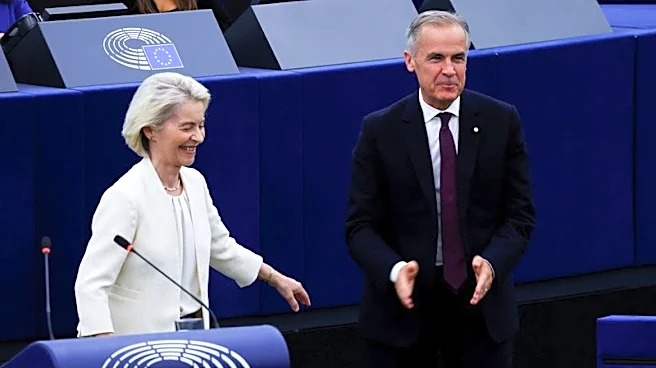
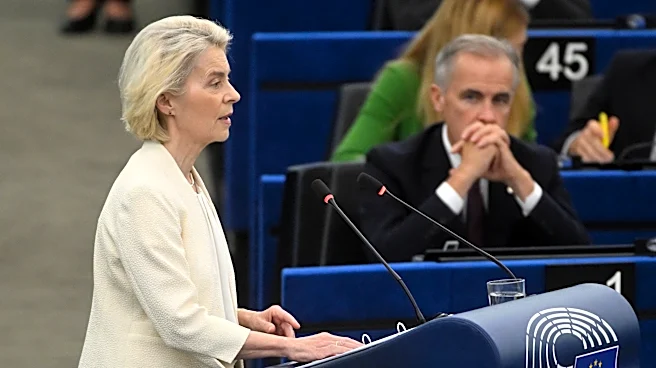
to deepen ties between the EU and Canada in areas such as technology, economic security, and military industry. Canadian Prime Minister Mark Carney welcomed the proposal, emphasizing the need for strategic autonomy and resilience against external pressures, particularly in light of strained relations with the United States. President Trump described the potential partnership as a 'hostile act' and a 'laughable' development, indicating that any agreement perceived as having 'bad intention' would lead to severe trade repercussions. The concept of an 'associate membership' for a non-European nation currently lacks formal basis in EU statute, and its specifics are yet to be defined. However, the discussions highlight a growing desire among Canada and the EU to strengthen their alliance amidst global geopolitical shifts and trade disputes.
Why It's Important?
This development is important as it signals a potential escalation in trade tensions between the United States and its traditional allies, Canada and Europe. President Trump's threat of tariffs could disrupt existing trade relationships, impacting U.S. industries that rely on imports and exports with European nations. For American consumers, increased tariffs could lead to higher costs for goods. The proposed Canada-EU partnership, driven by a desire for strategic autonomy, reflects a broader global trend where countries are seeking to diversify their economic and political alliances to reduce dependence on a single dominant power. This move could reshape international trade dynamics and alliances, potentially leading to new economic blocs and shifting geopolitical influence. The situation underscores the challenges of maintaining multilateral cooperation in an environment of increasing protectionism and nationalistic policies, with significant implications for global economic stability and diplomatic relations.
What's Next?
The immediate next steps involve further discussions between Canada and the EU to define the specifics of the proposed 'associate membership.' Canadian Prime Minister Carney is scheduled to host EU leaders for a summit in Montreal, where this new relationship will be a key topic. The European Commission will need to flesh out the proposal, which will then require approval from EU member states. President Trump's administration will likely monitor these developments closely, and any perceived progression towards a 'hostile' agreement could trigger the threatened tariffs. Stakeholders, including businesses and trade organizations in the U.S. and Europe, will be watching for clarity on the potential economic impacts. The situation could also prompt further diplomatic exchanges as all parties attempt to navigate the complex geopolitical landscape and mitigate potential trade wars.
Beyond the Headlines
Beyond the immediate trade implications, this situation highlights a deeper shift in international relations, where traditional alliances are being re-evaluated. The push for 'strategic autonomy' by Canada and the EU suggests a desire to assert greater independence in their foreign policy and economic decisions, potentially moving away from a U.S.-centric global order. This could lead to a more multipolar world, with new power centers emerging. The rhetoric from President Trump, framing such partnerships as 'hostile acts,' underscores a transactional approach to international relations, where alliances are viewed through the lens of immediate economic or political gain rather than shared values or long-term cooperation. This could erode trust among allies and foster an environment of uncertainty, impacting global governance and collective action on issues like climate change, security, and human rights. The long-term consequence could be a fragmentation of the international system, with countries increasingly prioritizing bilateral deals over multilateral frameworks.